

Rajasthan
Rajasthan pairs hilltop forts and mirror-work palaces with candlelit courtyards, making it the most cinematic route for a first luxury journey through India.
Plan My Rajasthan TripWhere To Go
Rajasthan
Rajasthan is where India's royal past is still lived in, not just displayed. Sandstone forts rise straight out of the desert, lake palaces glow gold at dusk, and every city keeps its own craft alive — block printing in Jaipur, miniature painting in Udaipur, silver work passed down through family workshops. A private Rajasthan tour moves at a pace that lets each of these details land: a sunrise fort visit before the crowds, a private boat out on Lake Pichola, an evening of Rajasthani folk music in a courtyard built for exactly that. This is the state most first-time visitors picture when they imagine India, and it rewards a slower, more considered visit.
Jaipur
The Pink City — Amber Fort, City Palace, and bazaars that have sold the same block-printed cotton and blue pottery for generations.
Jaisalmer
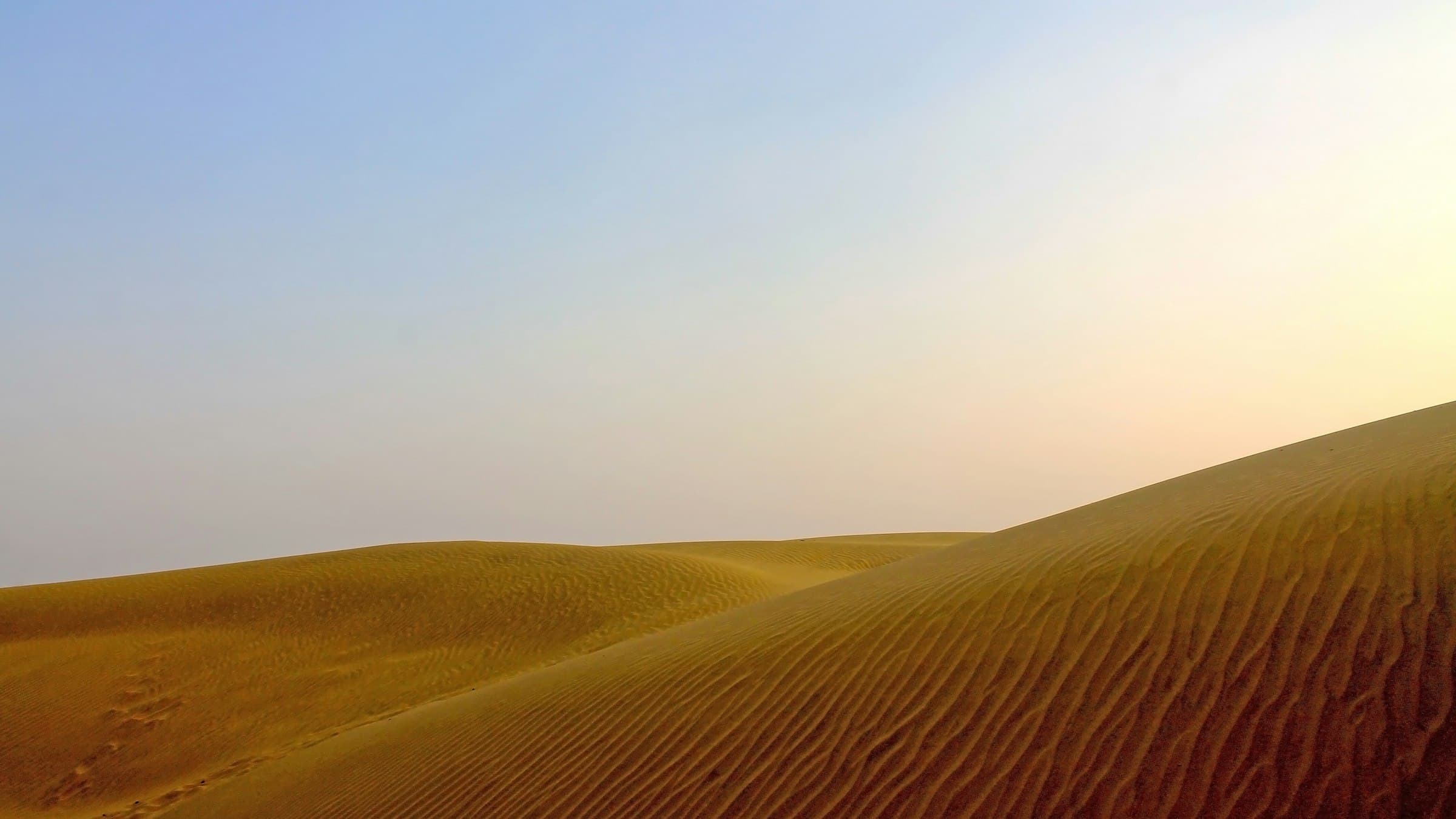
The Golden City — a living sandstone fort still inhabited today, and the Thar Desert's dunes just beyond the city limits.
Jodhpur
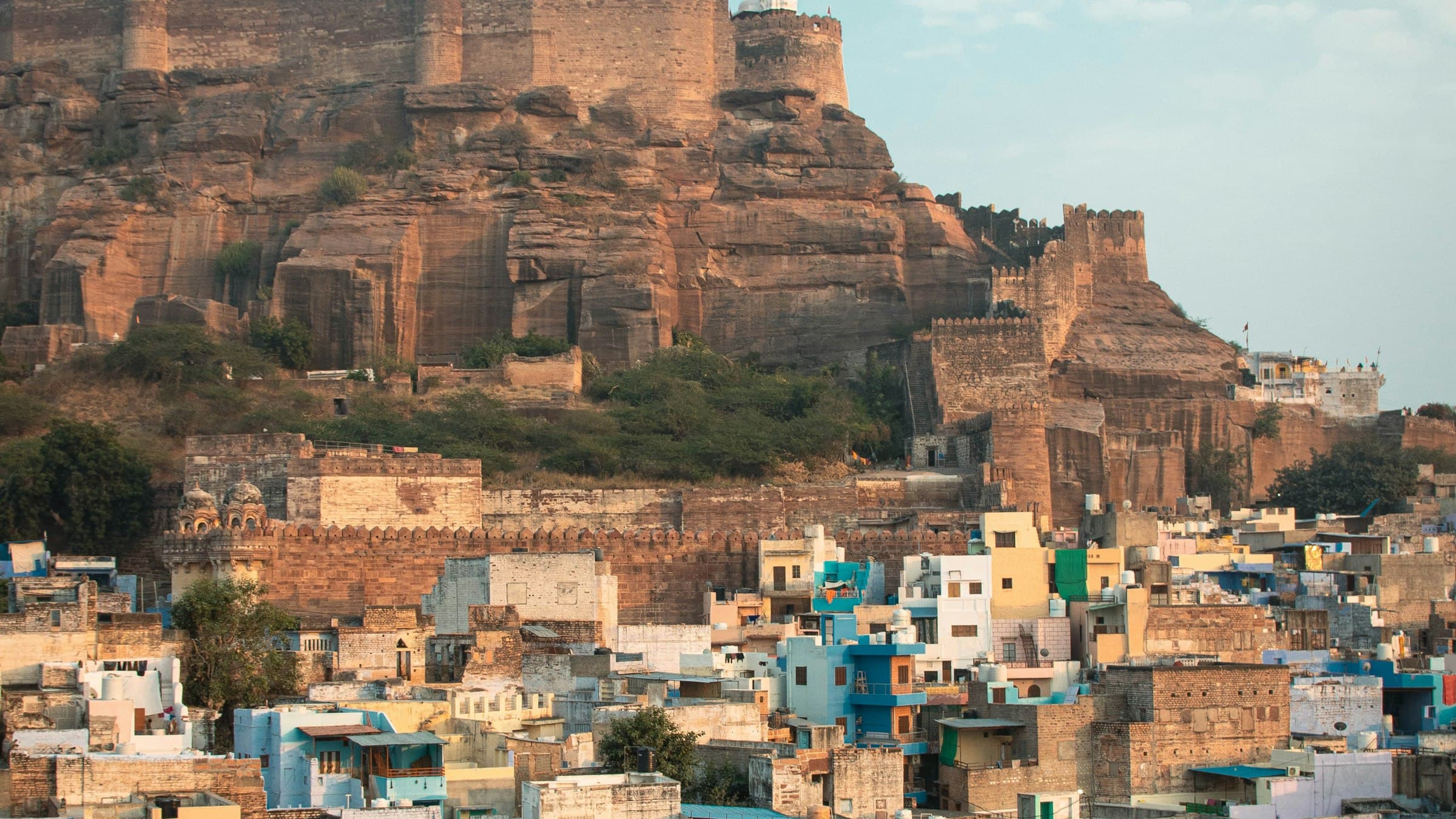
The Blue City — Mehrangarh Fort towering over an indigo-washed old town, with Umaid Bhawan's art deco silhouette on the skyline.
Kumbhalgarh
A hilltop fort ringed by one of the longest walls in the world, and the birthplace of Maharana Pratap.
Pushkar
A holy lake town ringed by ghats and temples, home to one of India's only temples dedicated to Brahma.
Udaipur
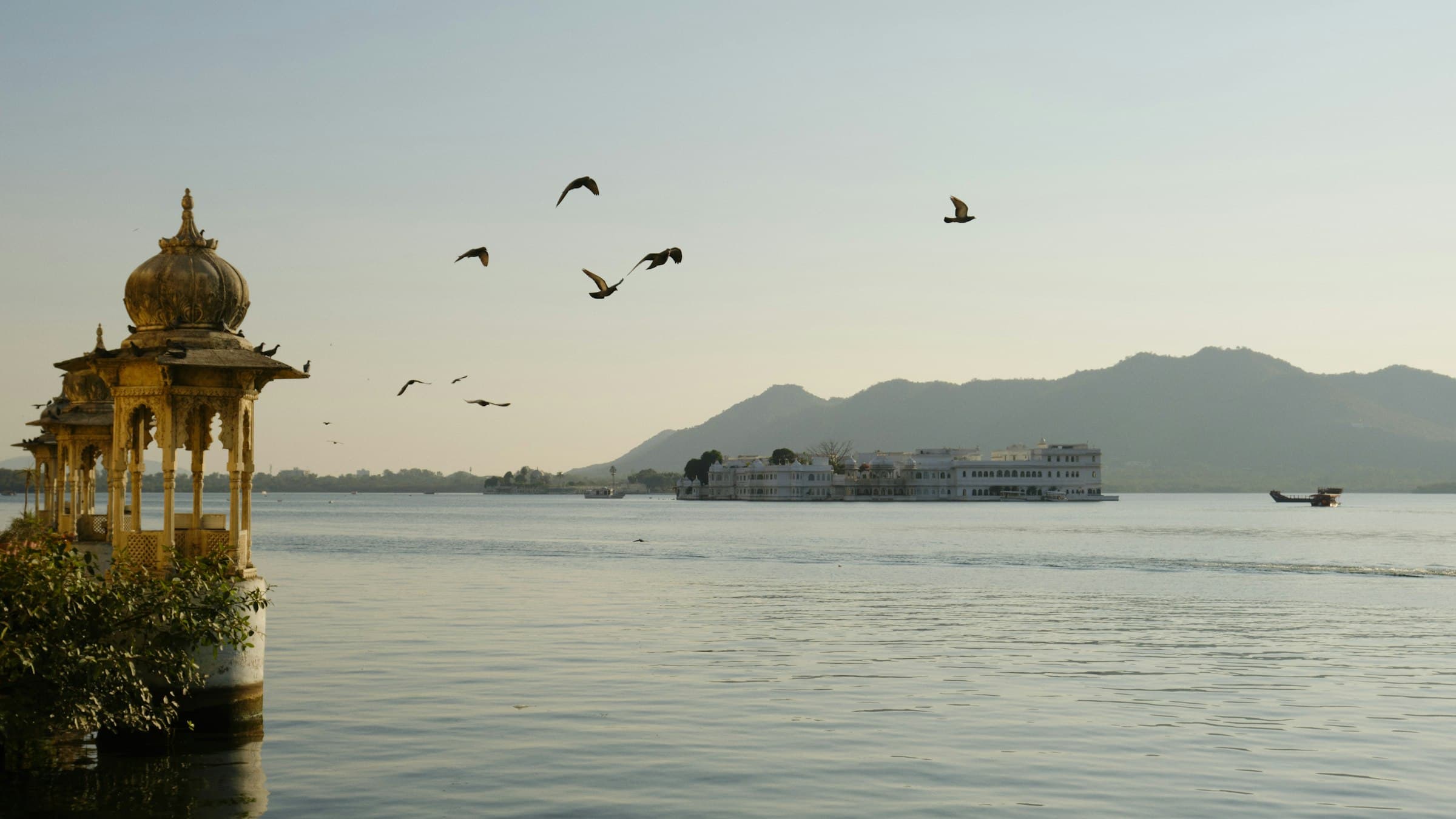
The City of Lakes — white marble palaces reflected in Lake Pichola, best seen from the water at sunset.
What To See
What A Private Guide Actually Shows You
Rajasthan's real highlights rarely need an itinerary of their own — they're what a private guide builds each day around. In Jaipur alone, several of India's most photographed landmarks sit within a short private drive of one another.
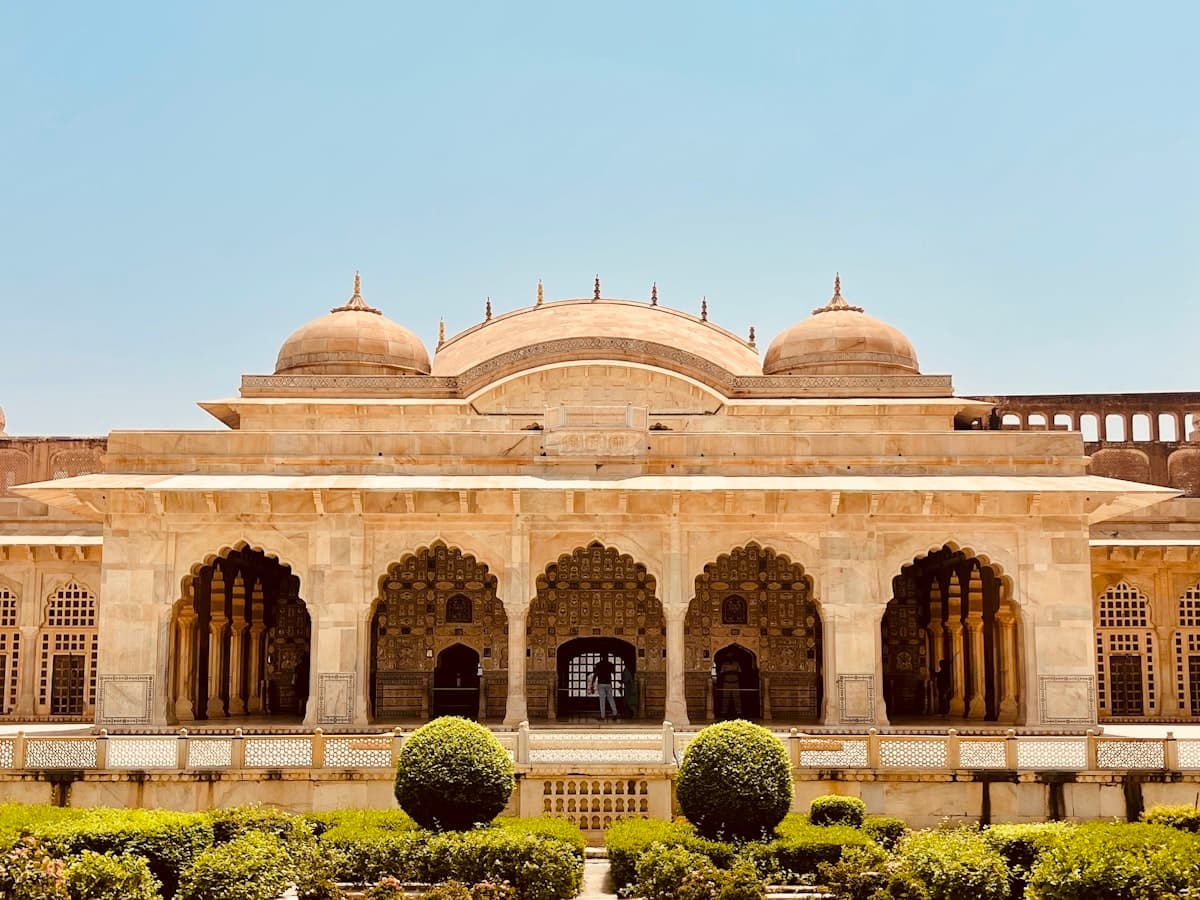
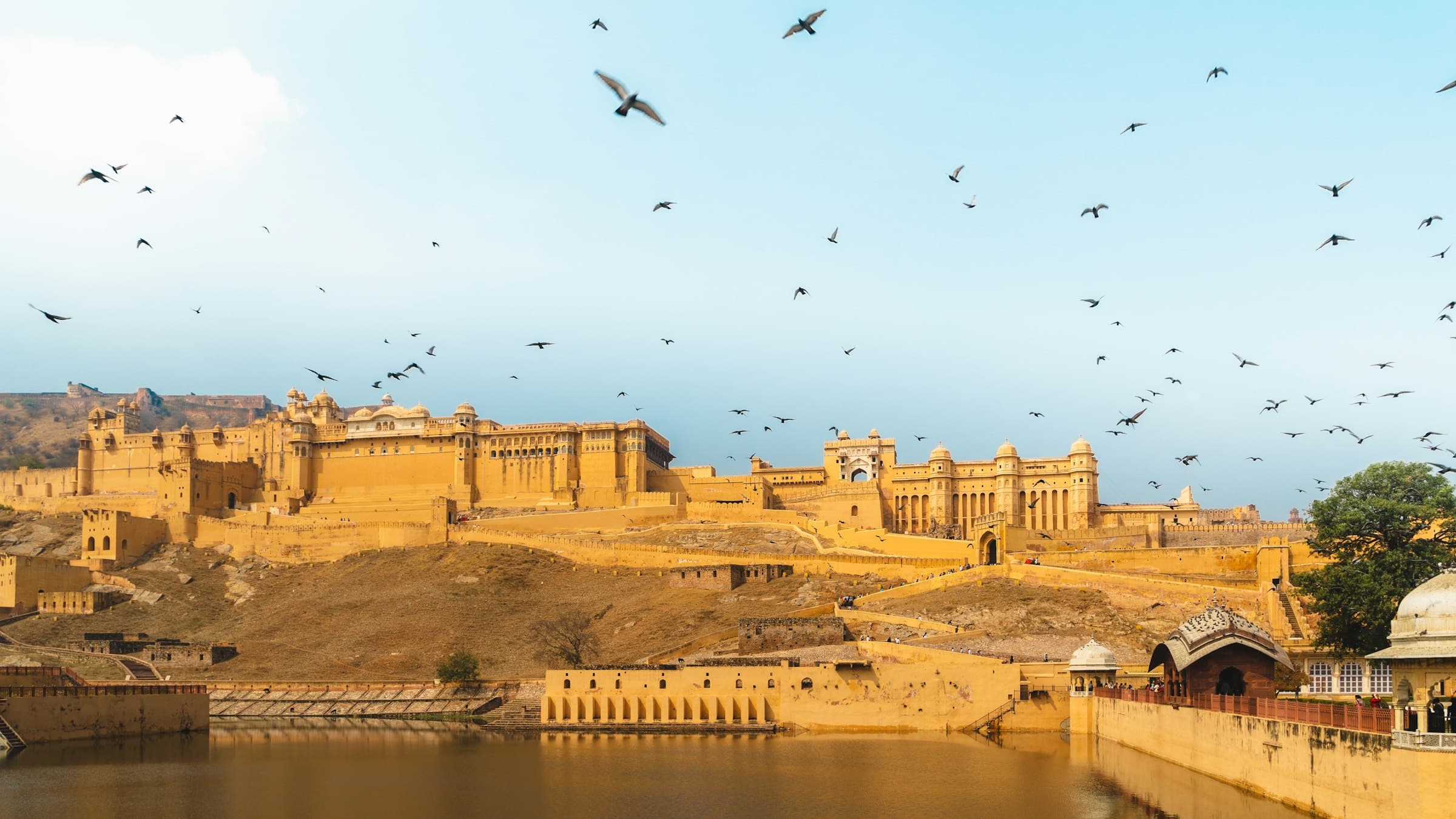
Amber Fort
Jaipur's great hill fort, built in pale sandstone on a ridge above Maota Lake.
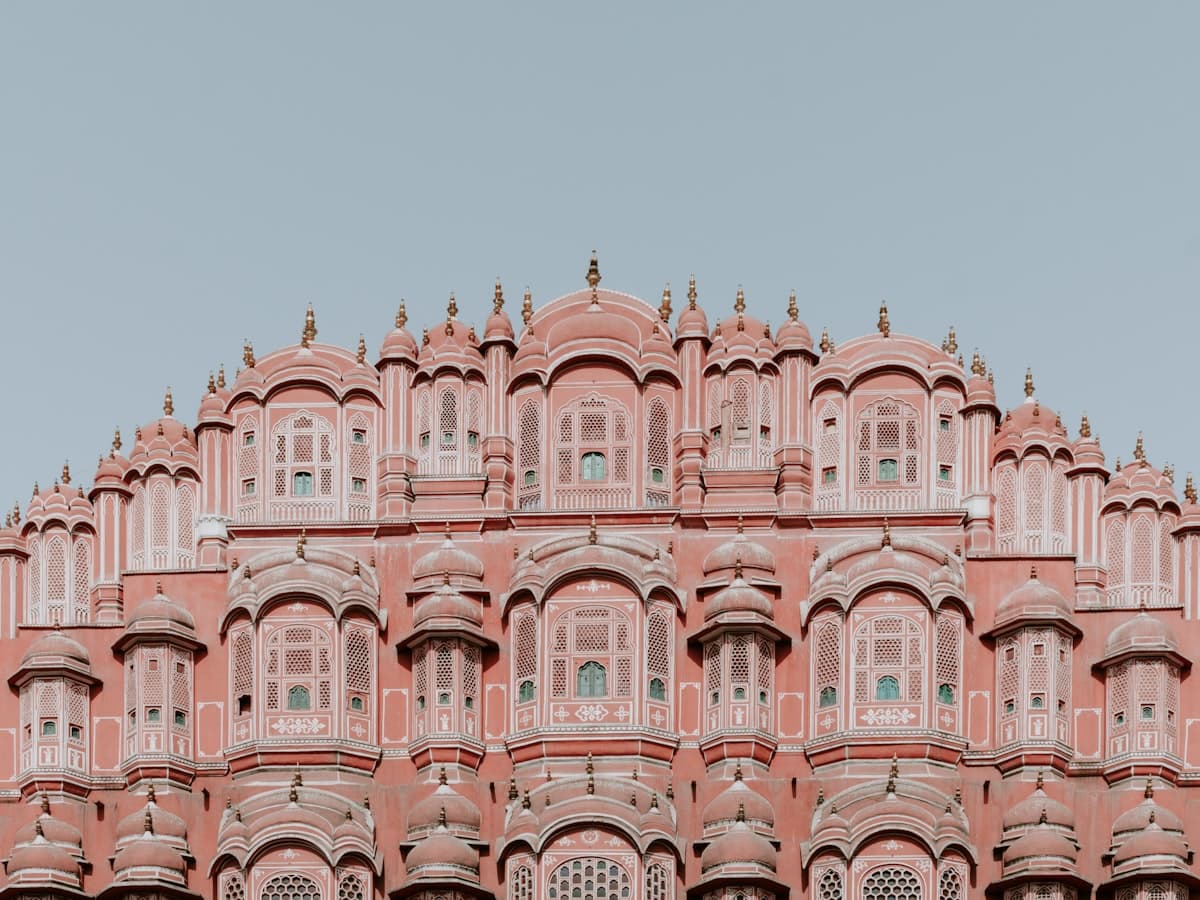
Hawa Mahal
The Palace of Winds — a five-storey screen of 953 windows on Jaipur's busiest street.
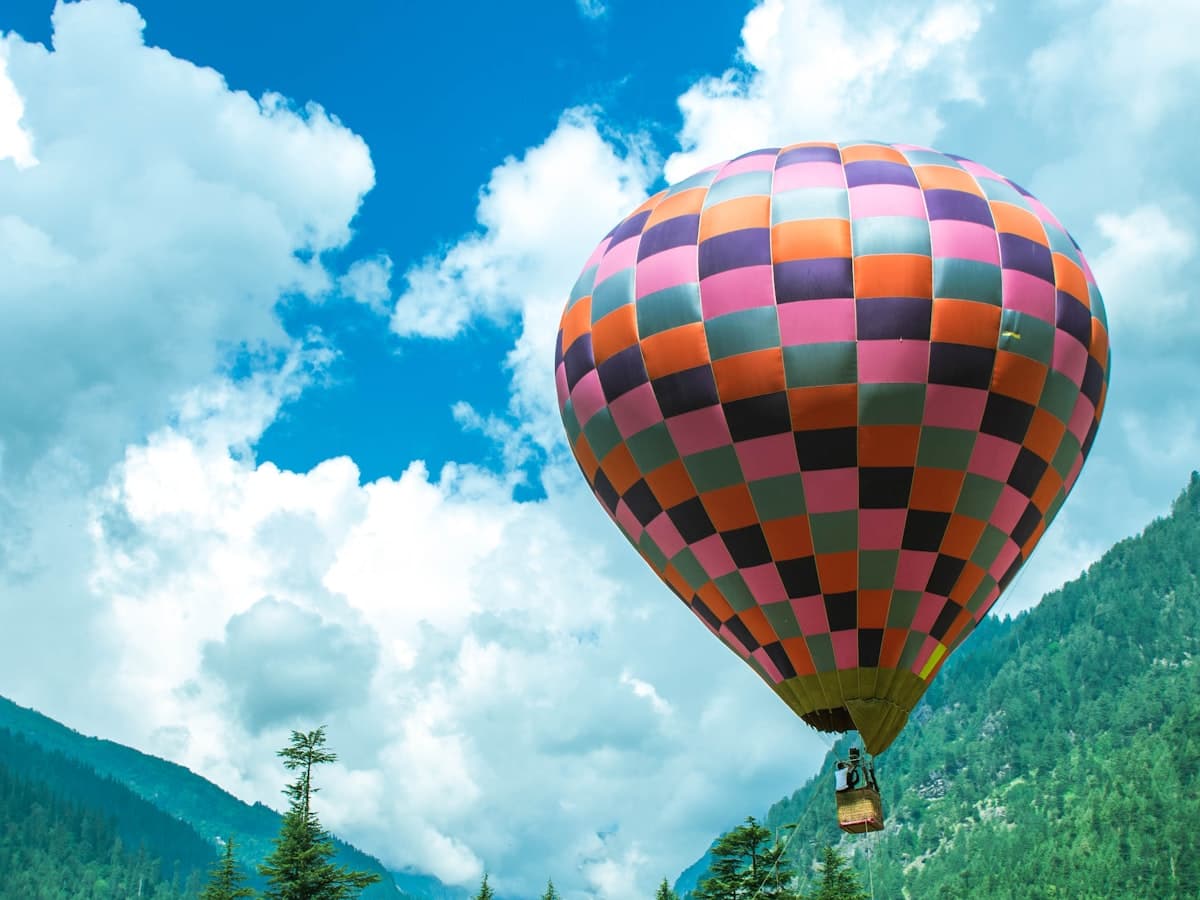
Hot-Air Balloon over Amber
Lift off at first light and drift over Amber Fort, the Aravalli ridge and the old city.
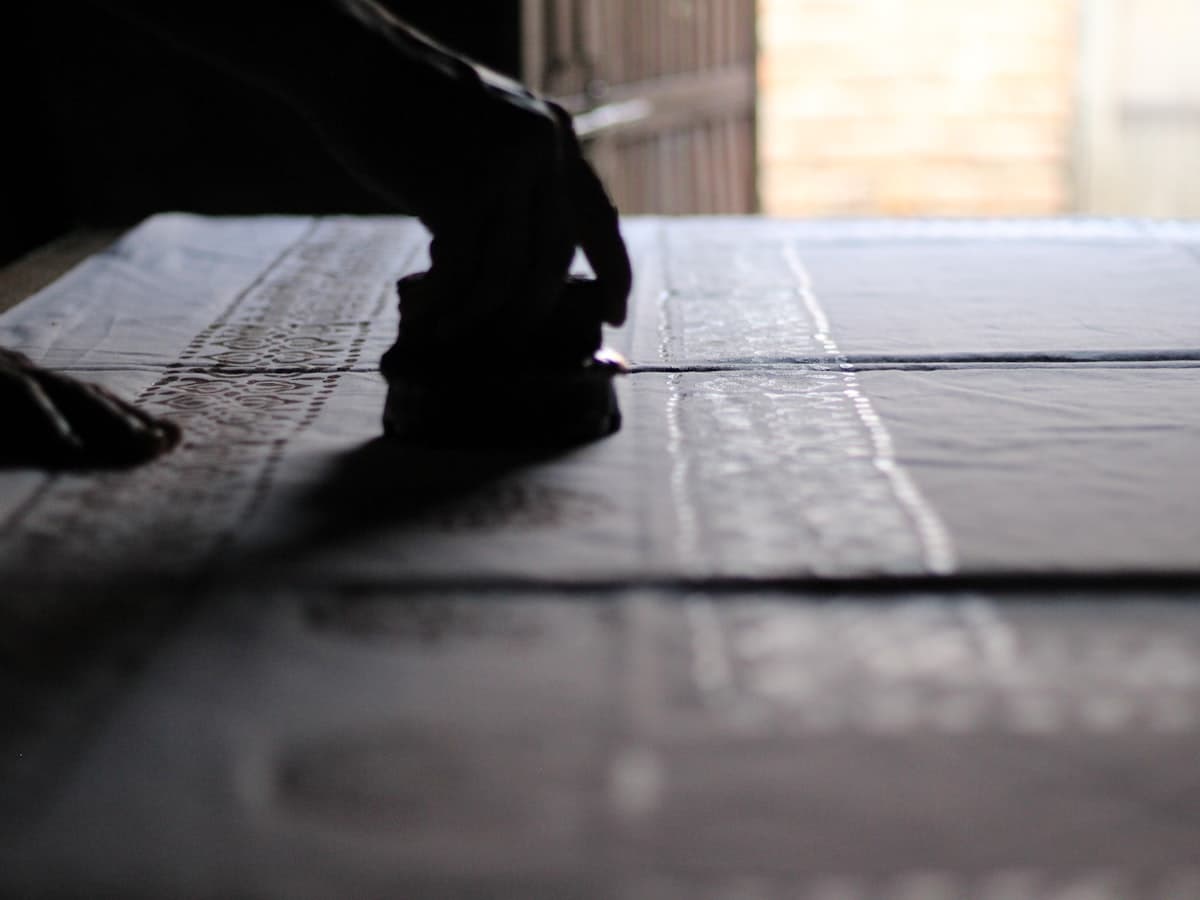
Block-Printing Workshop
Cut, ink and print with hand-carved teak blocks in a working Jaipur printers' workshop.
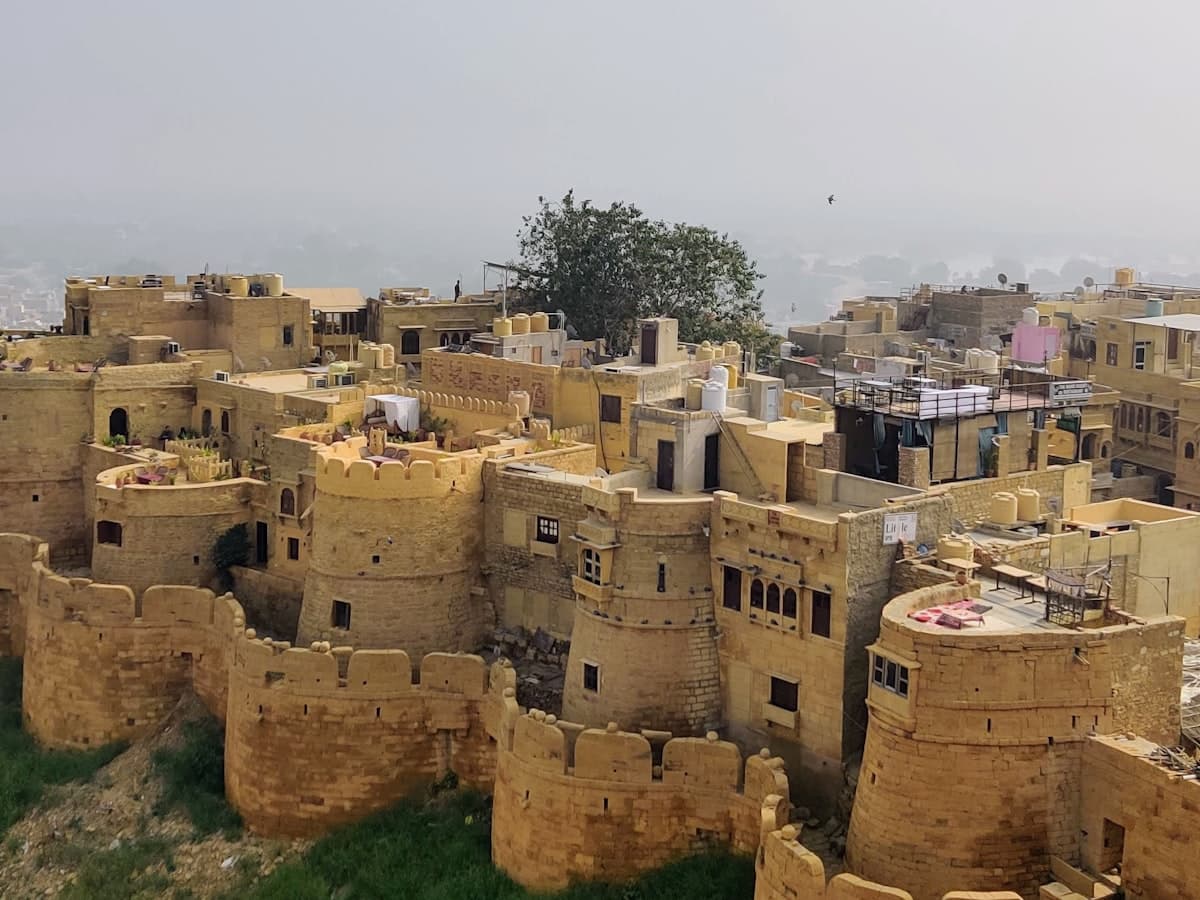
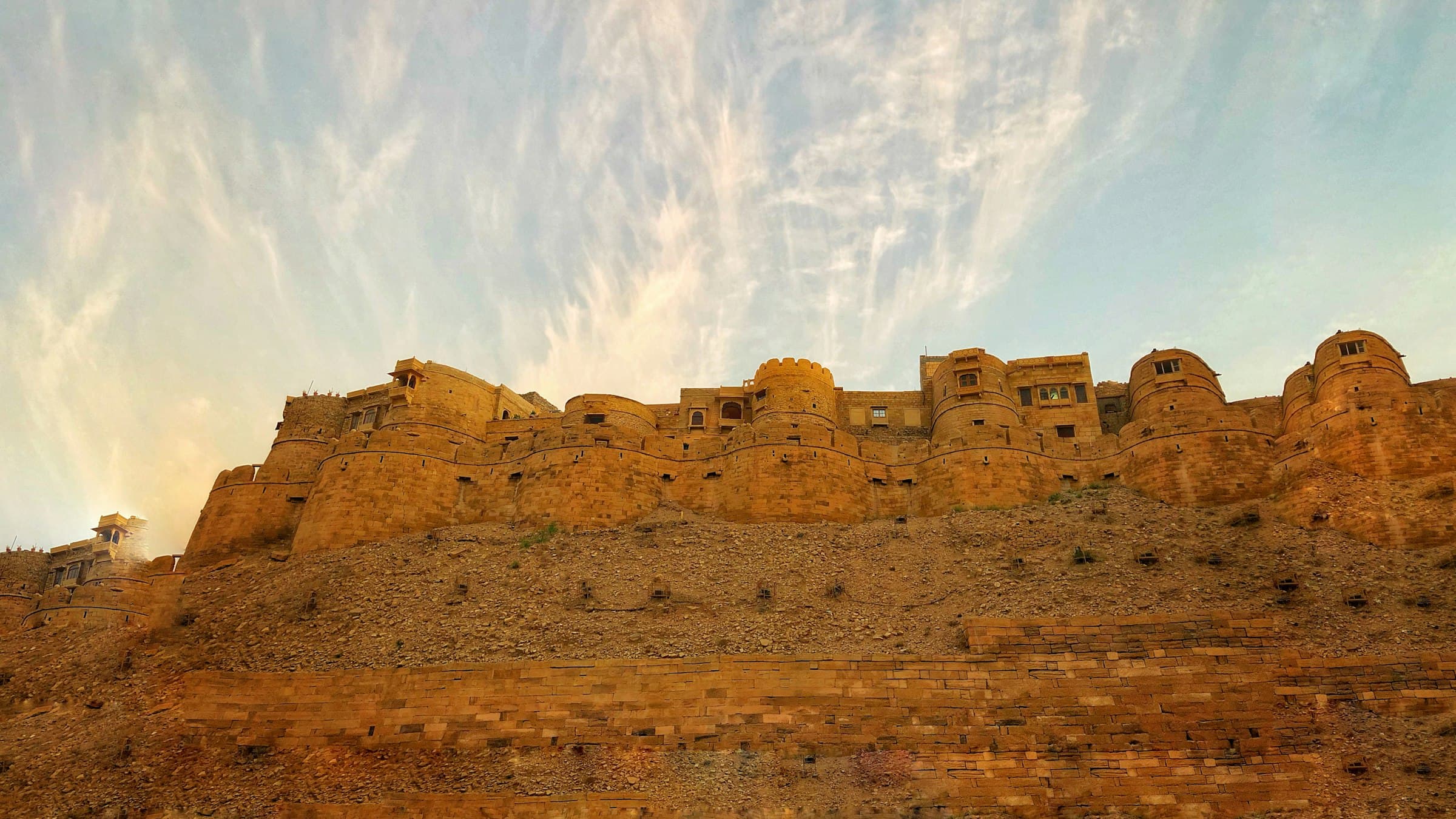
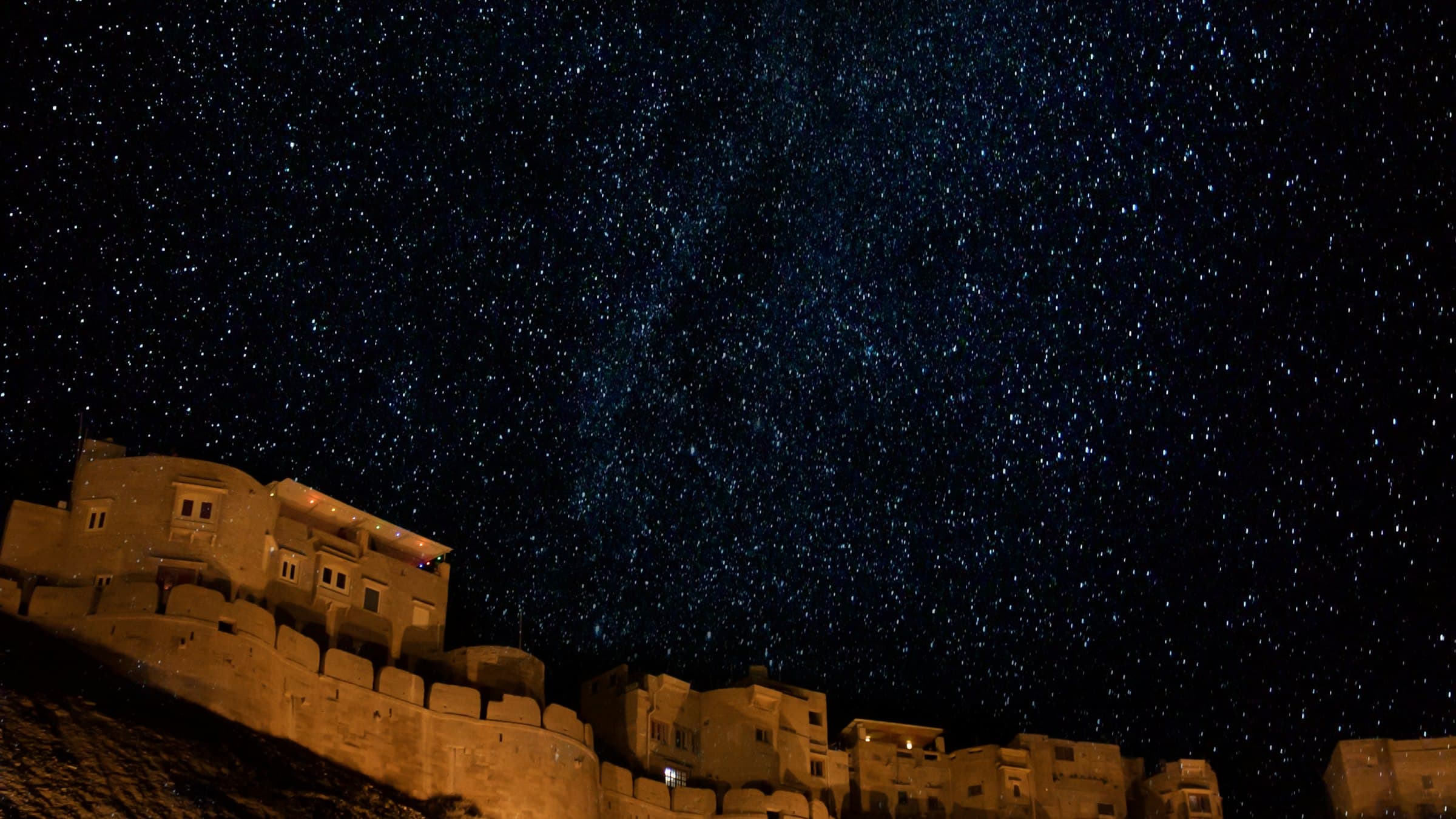
Jaisalmer Fort
A living fort: roughly a quarter of Jaisalmer still lives inside its walls.
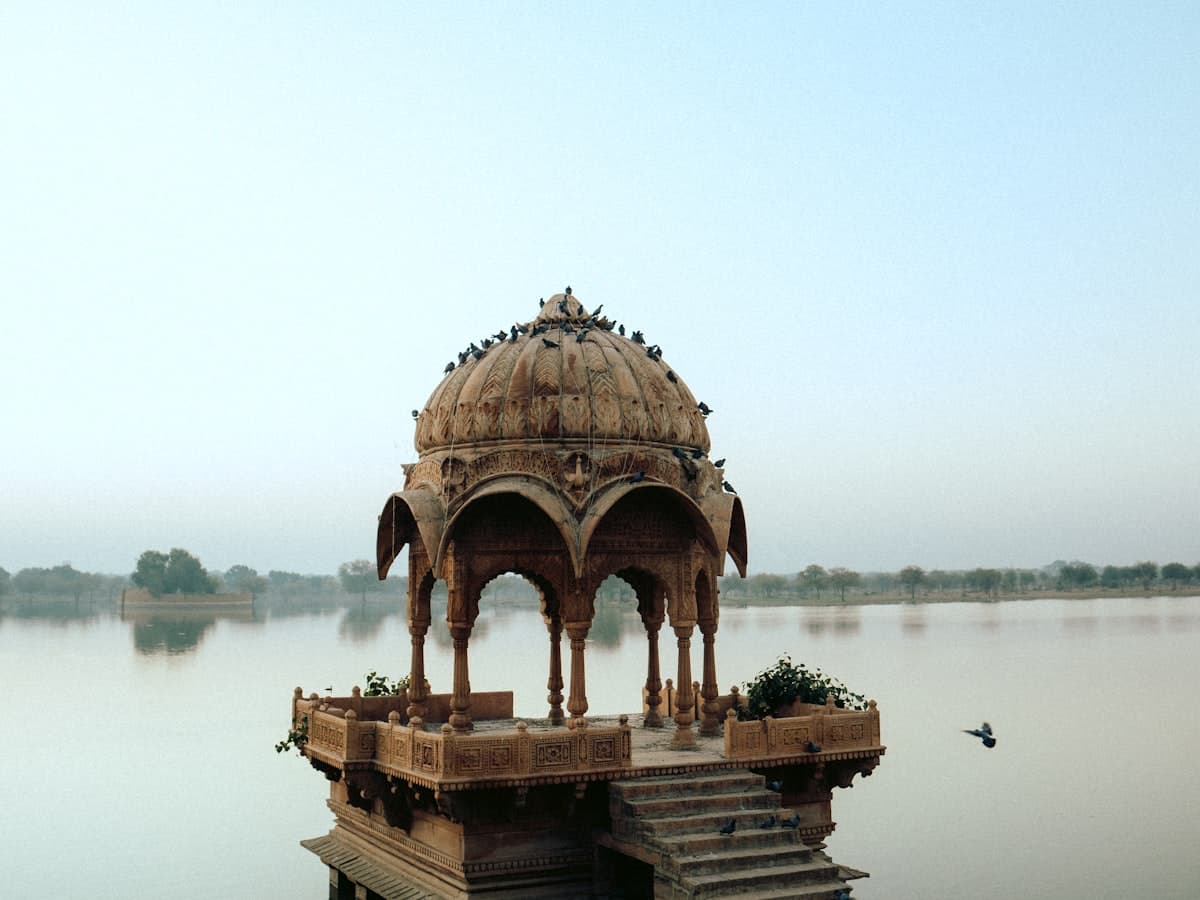
Gadisar Lake
A 14th-century reservoir on Jaisalmer's edge, edged with sandstone chhatris and steps.
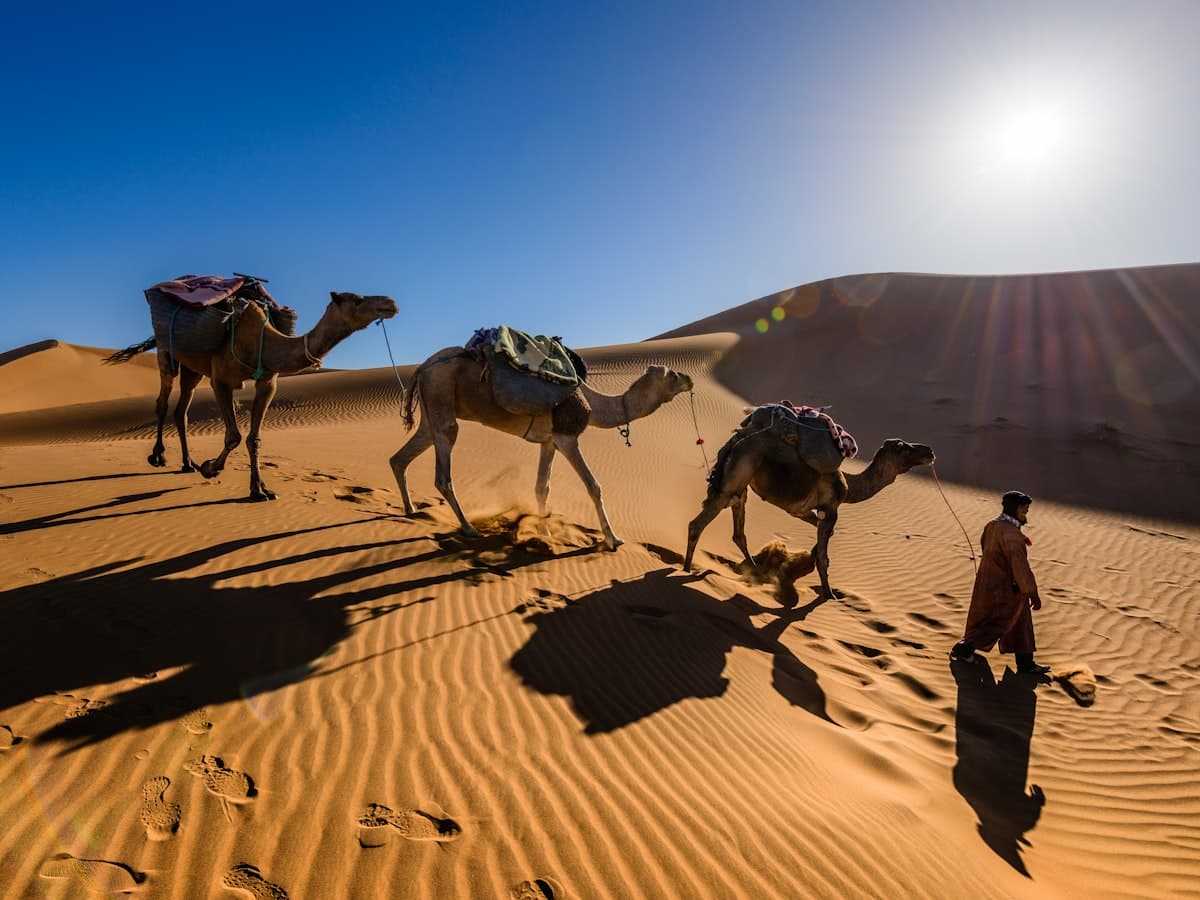
Camel Safari at Sam Sand Dunes
Ride out to the Sam dunes for sunset, with the option of a night under canvas.
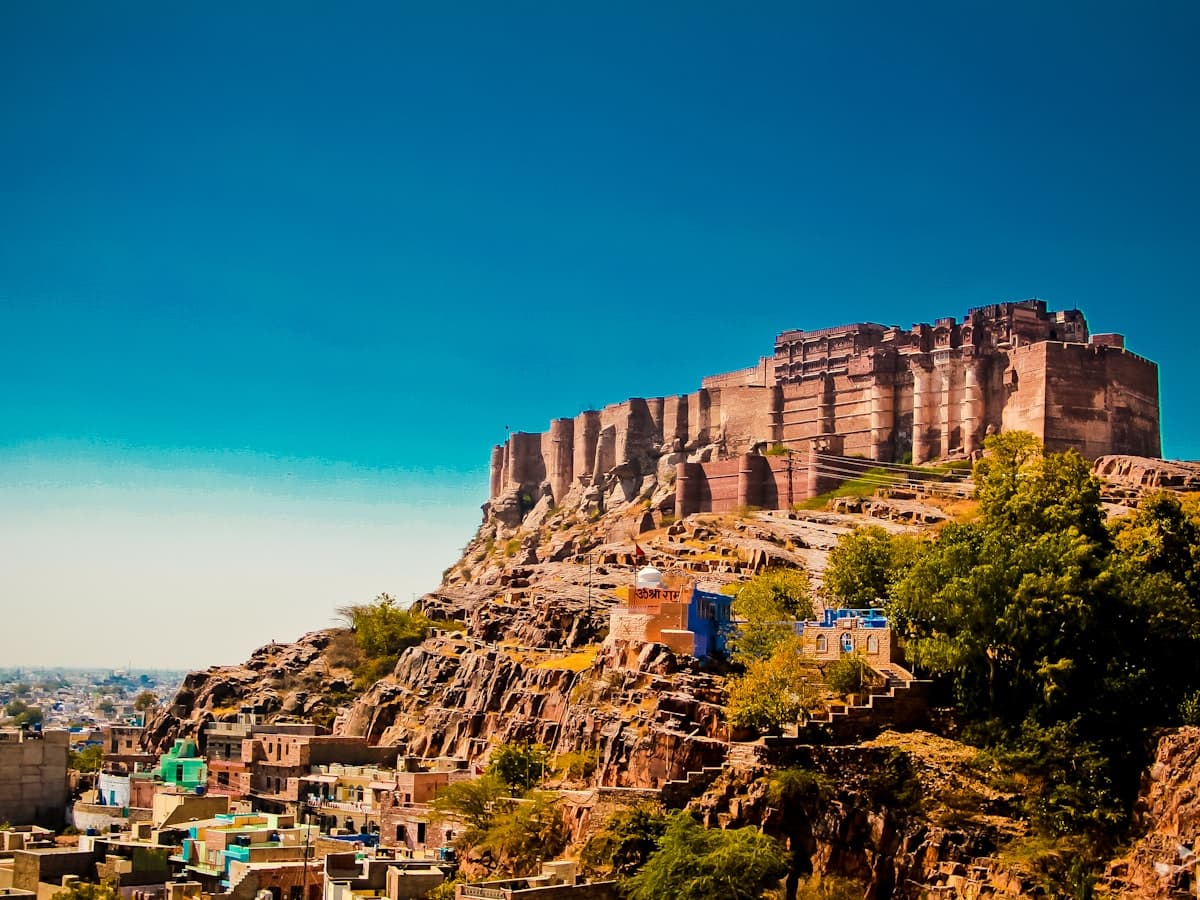
Mehrangarh Fort
Jodhpur's fort stands 120 metres above the blue city, growing straight out of the rock.
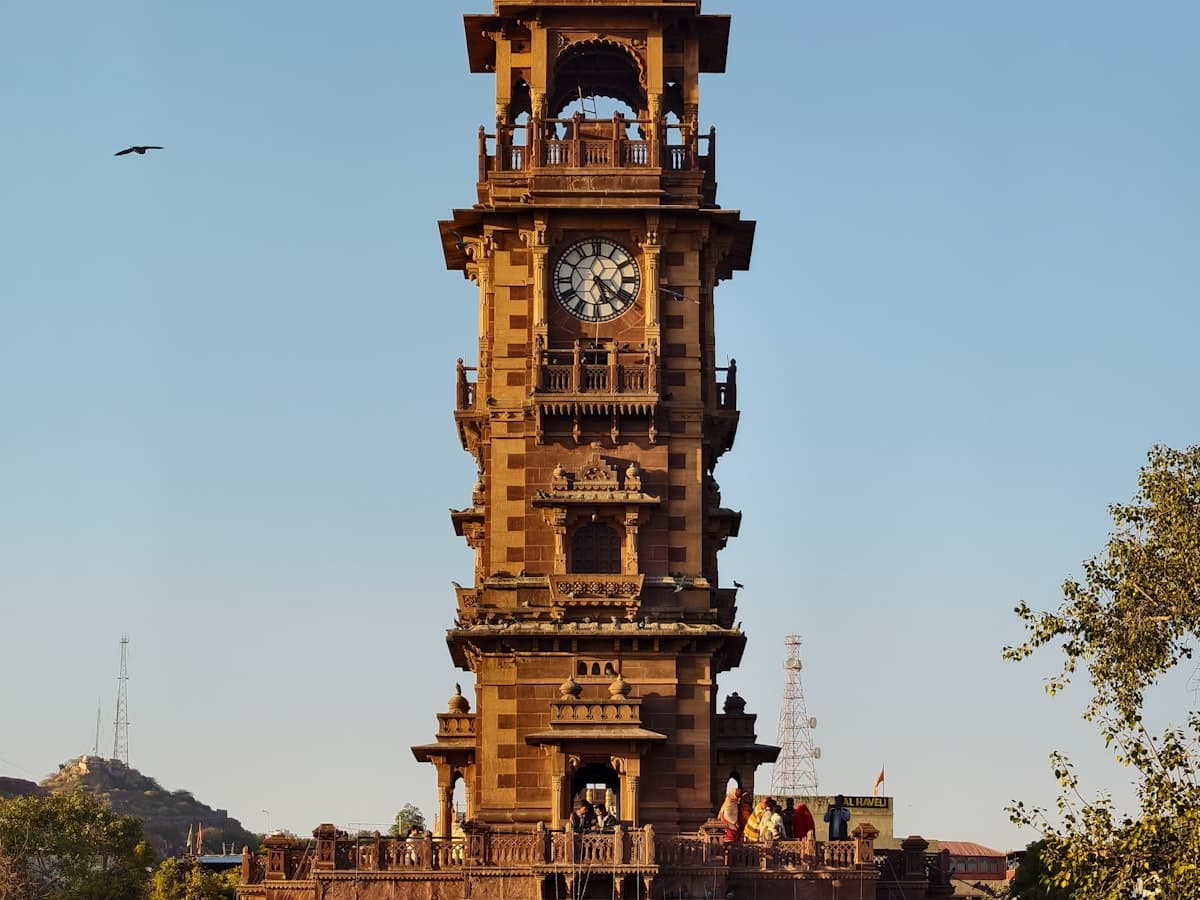
Sardar Market and Clock Tower
Jodhpur's working bazaar, wrapped around a Victorian clock tower.
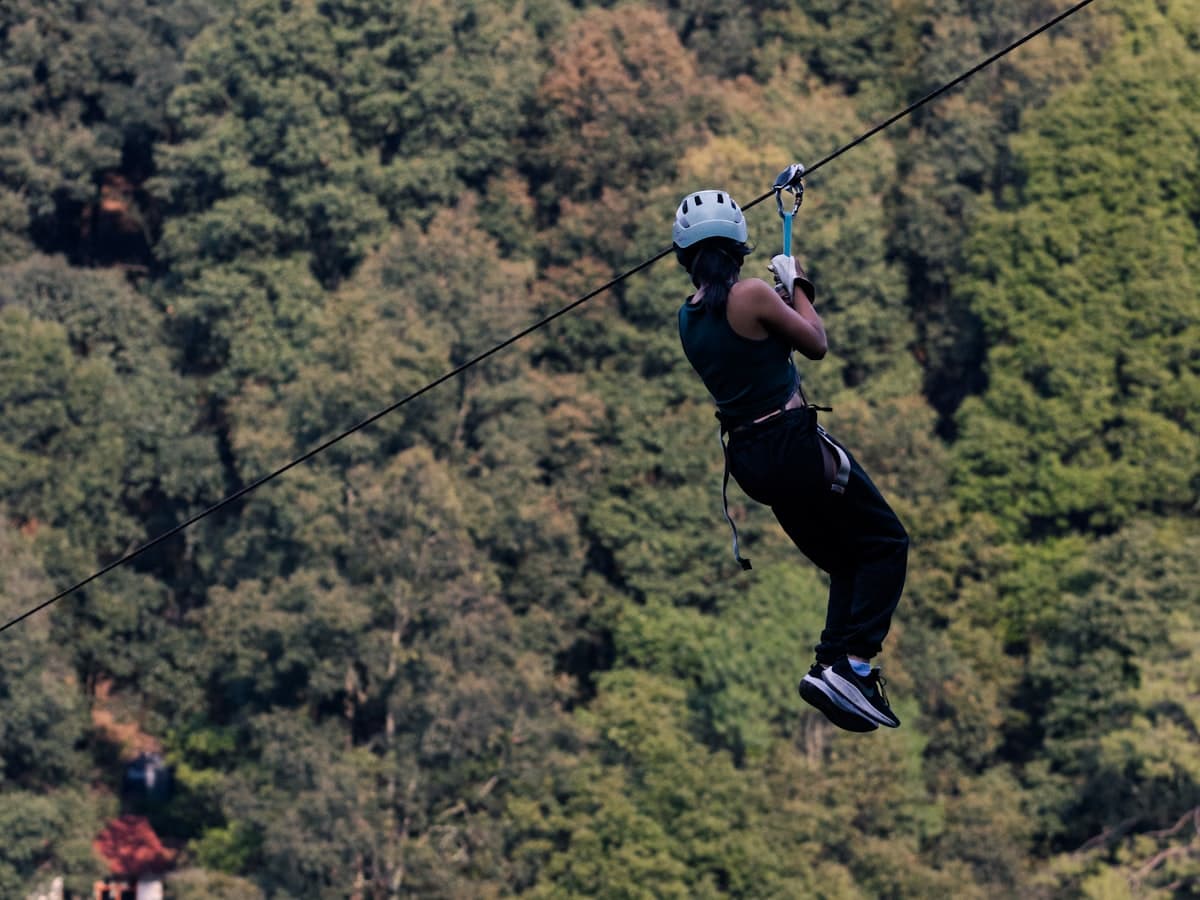
Flying Fox at Mehrangarh
Six zip-lines strung across the fort's lakes and ramparts, high above the blue city.
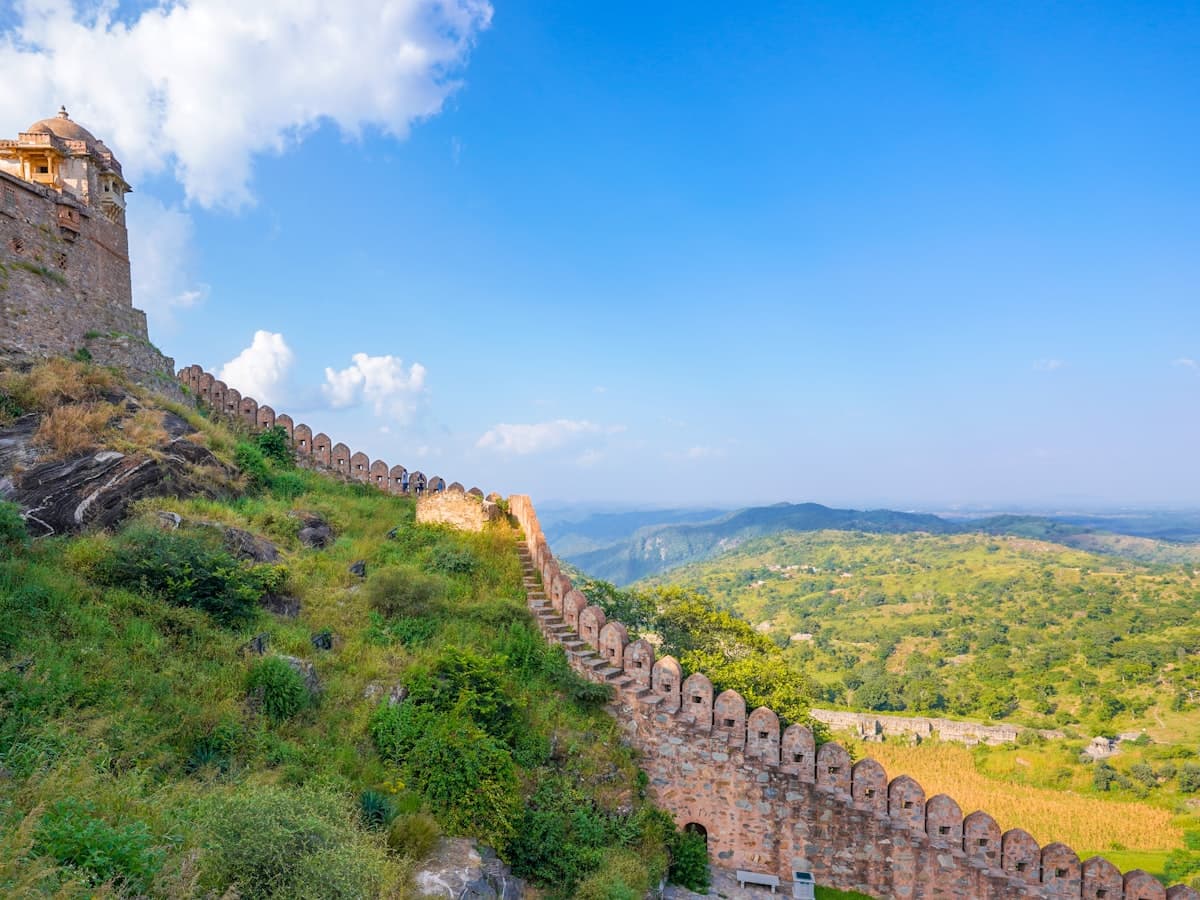
Kumbhalgarh Fort
Its wall runs 36 kilometres through the Aravallis — second in length only to the Great Wall.
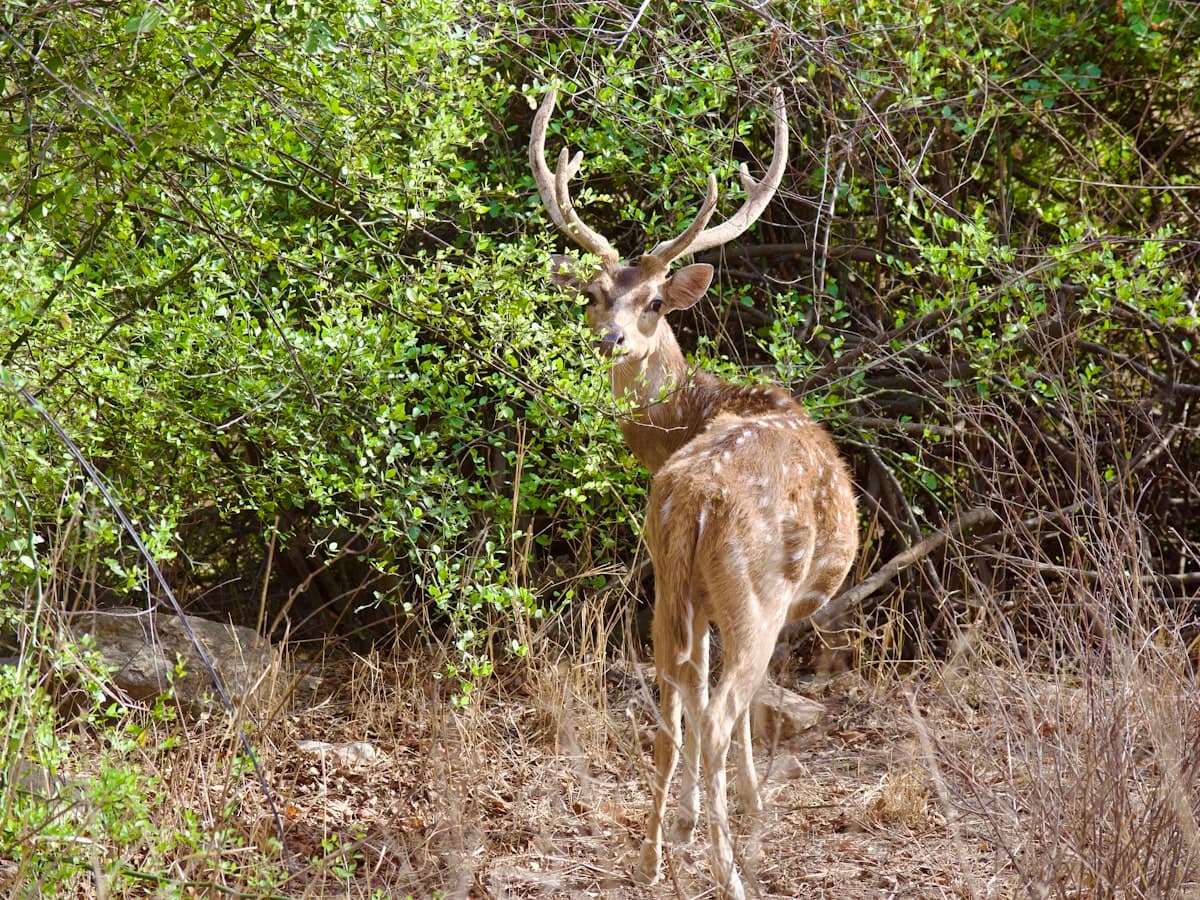
Kumbhalgarh Wildlife Sanctuary
Dry Aravalli forest wrapping the fort on every side, and one of the last refuges of Rajasthan's wolves.
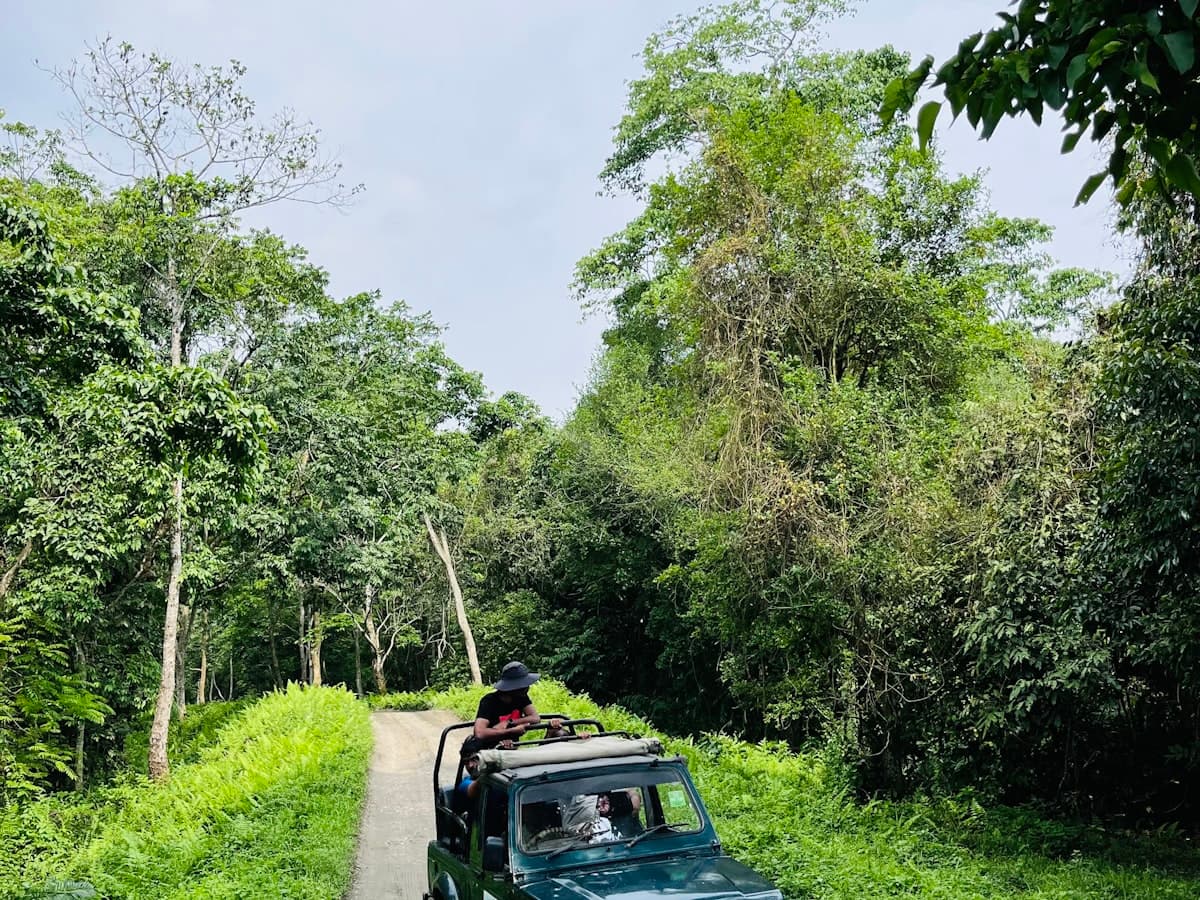
Jeep Safari in Kumbhalgarh Sanctuary
Open-jeep drive through Aravalli forest, into wolf, leopard and sloth bear country.
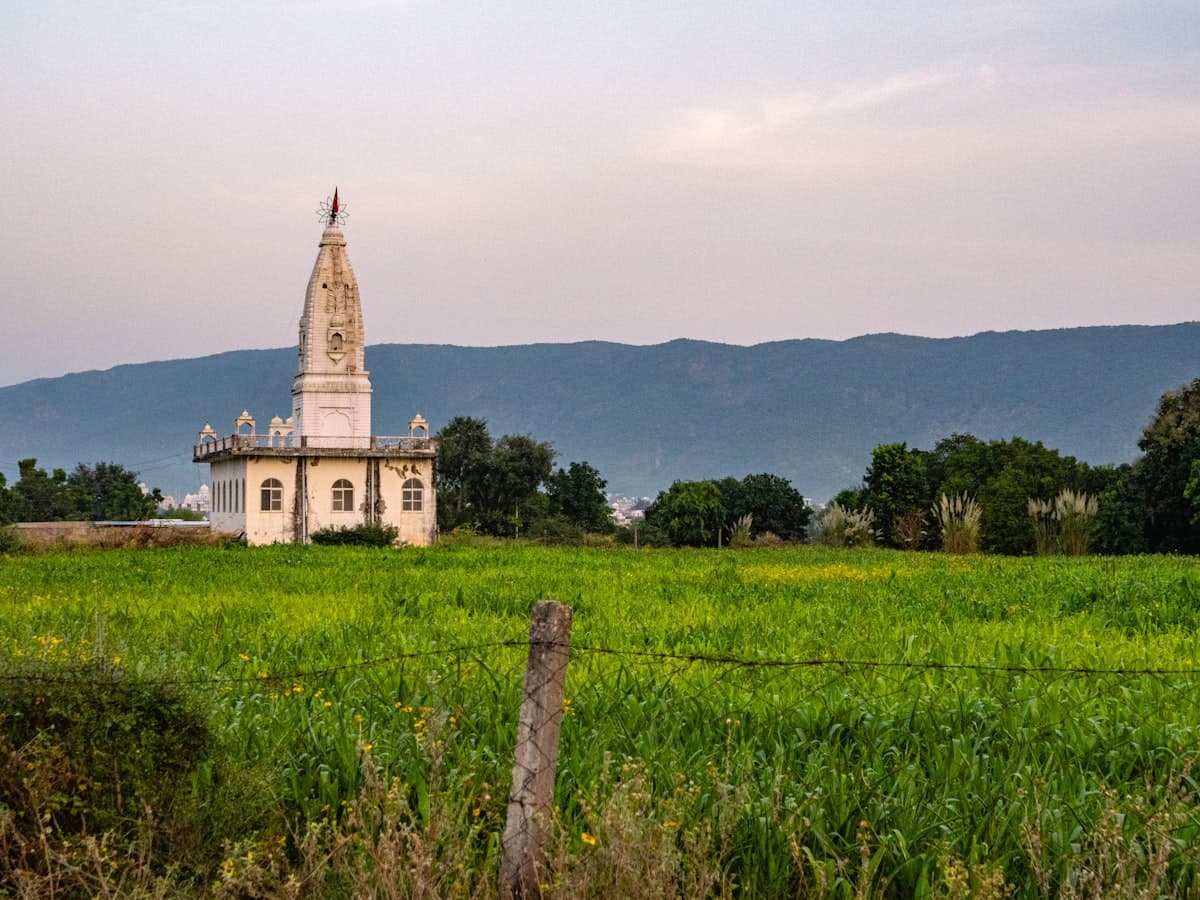
Brahma Temple
One of very few temples anywhere dedicated to Brahma, at the head of Pushkar's lake.
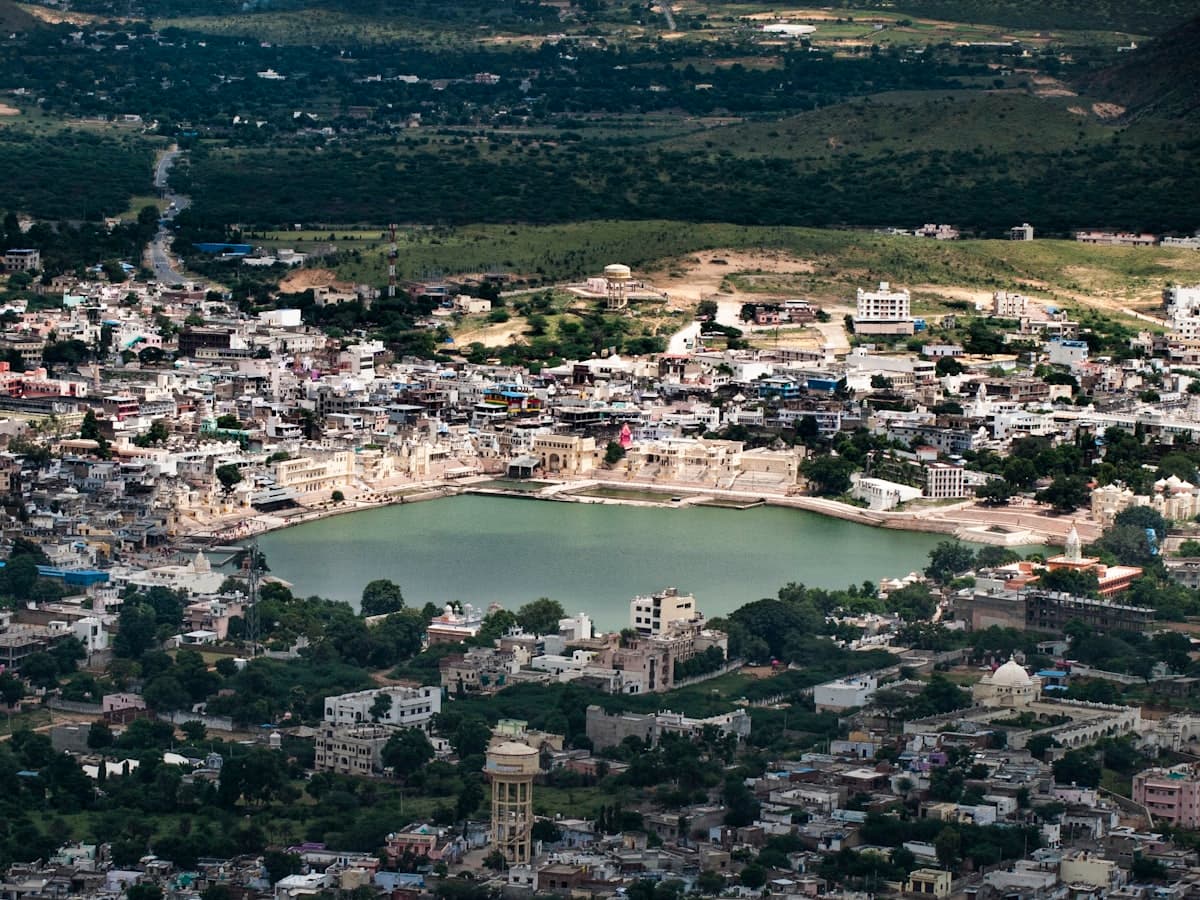
Pushkar Lake and the Ghats
Fifty-two ghats step down to a lake Hindus count among their most sacred.
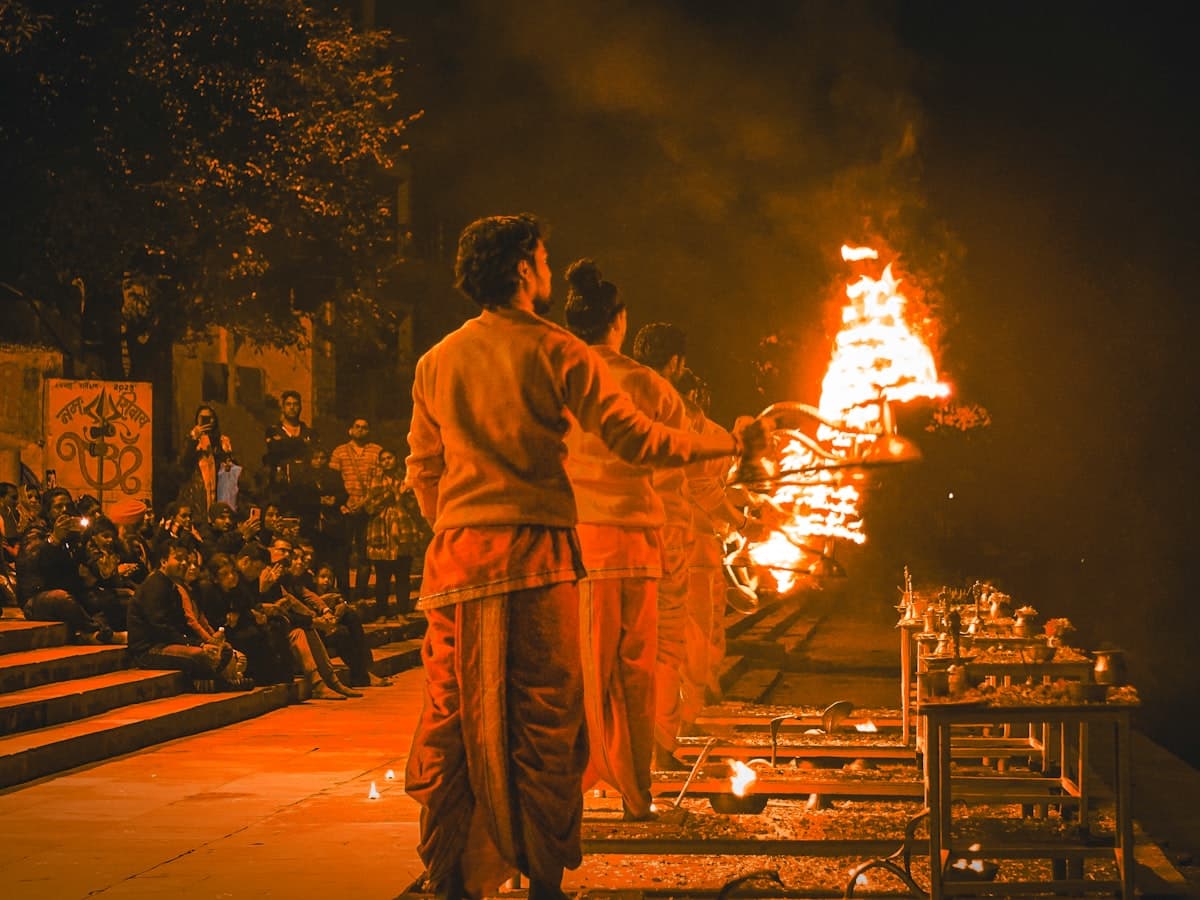
Evening Aarti at Pushkar Lake
Lamps go onto the water at dusk and the ghats fill for the evening prayer.
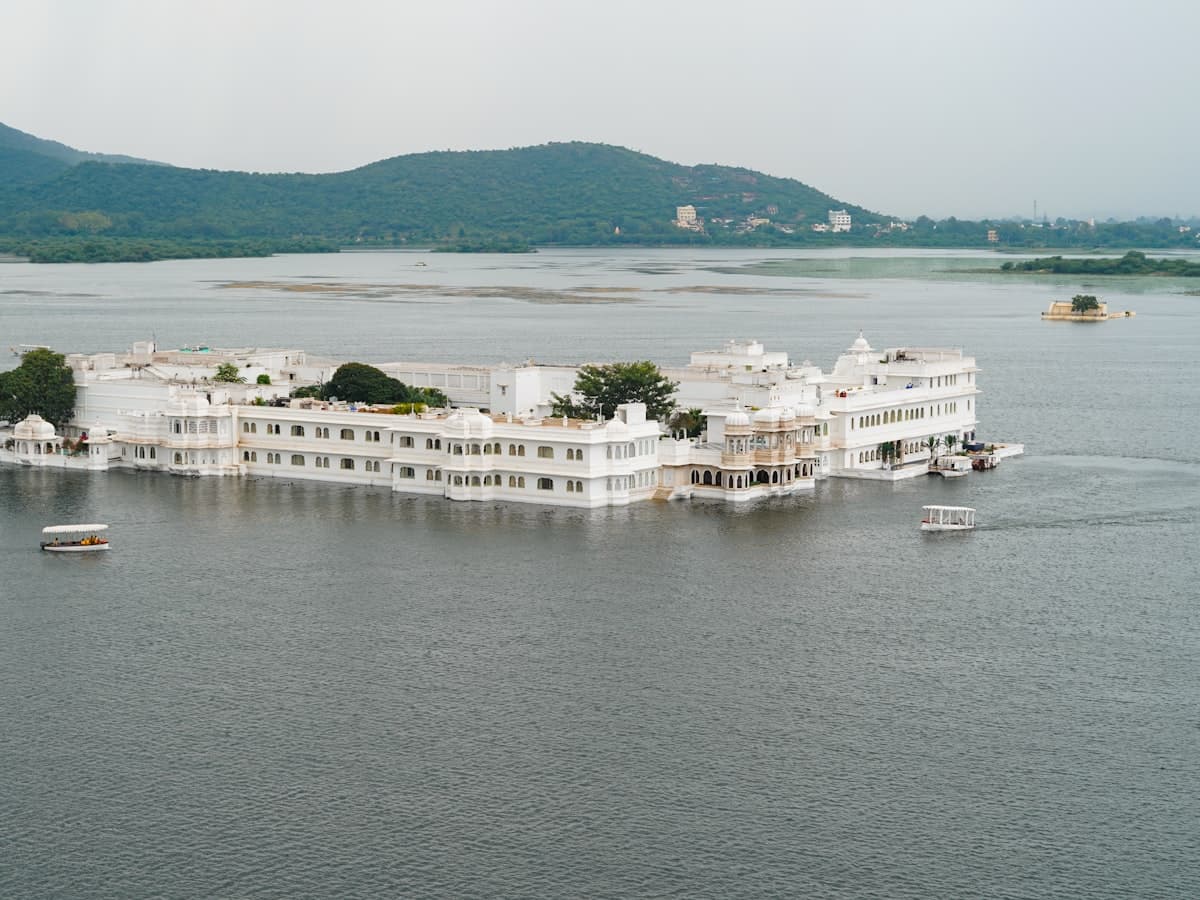
City Palace, Udaipur
A palace complex on Lake Pichola's east bank, still part-home to Udaipur's royal family.
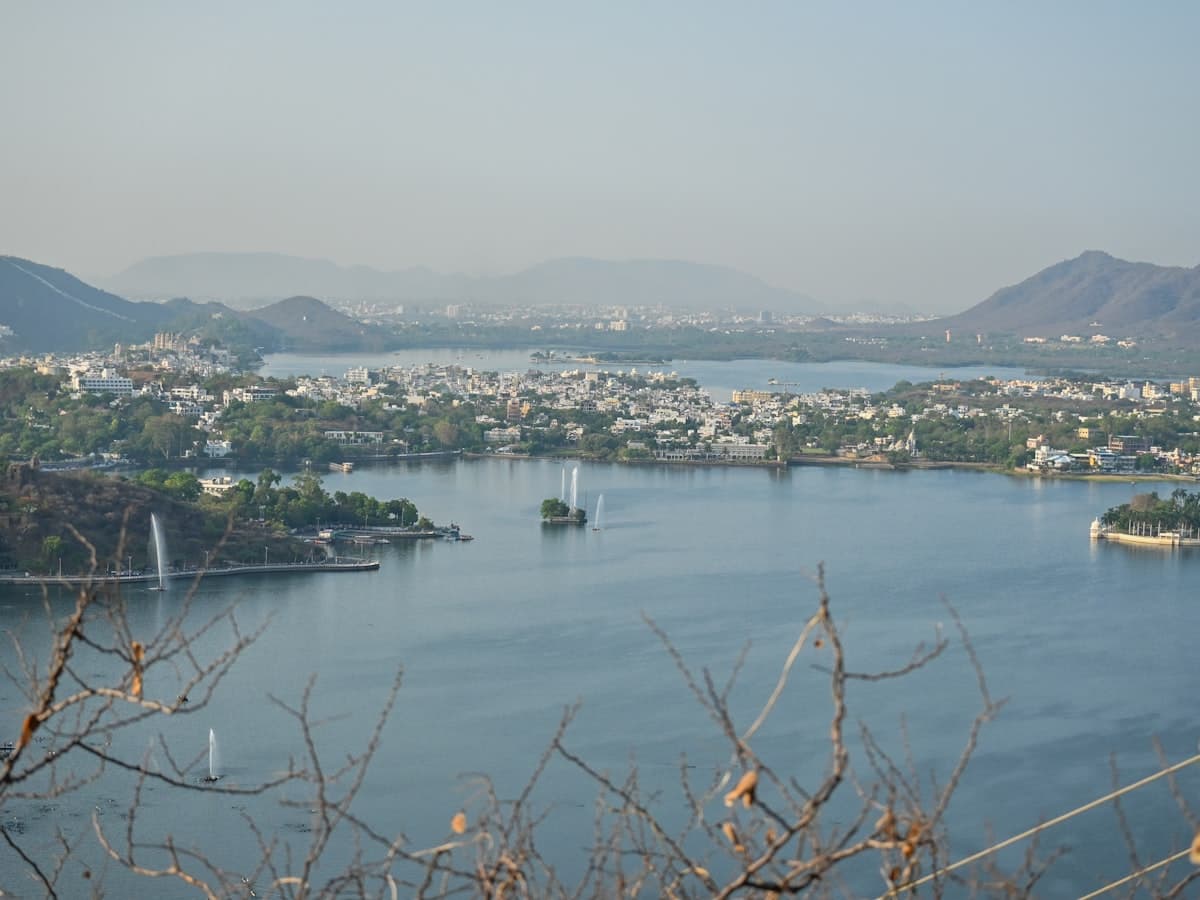
Lake Pichola
The man-made lake at Udaipur's heart, ringed by ghats, island palaces and the Aravalli hills.
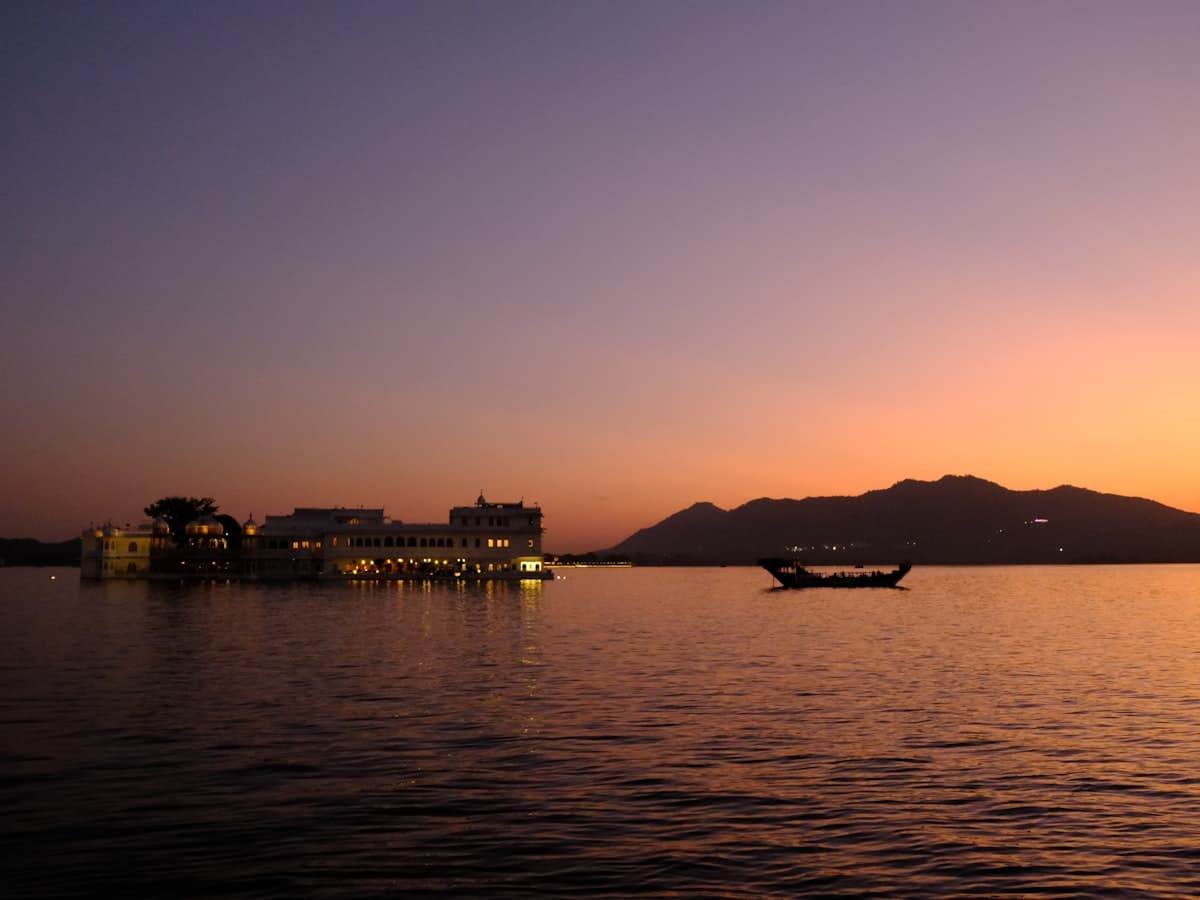
Lake Pichola Sunset Cruise
A slow boat out past Jag Mandir as the Aravallis take the last of the light.
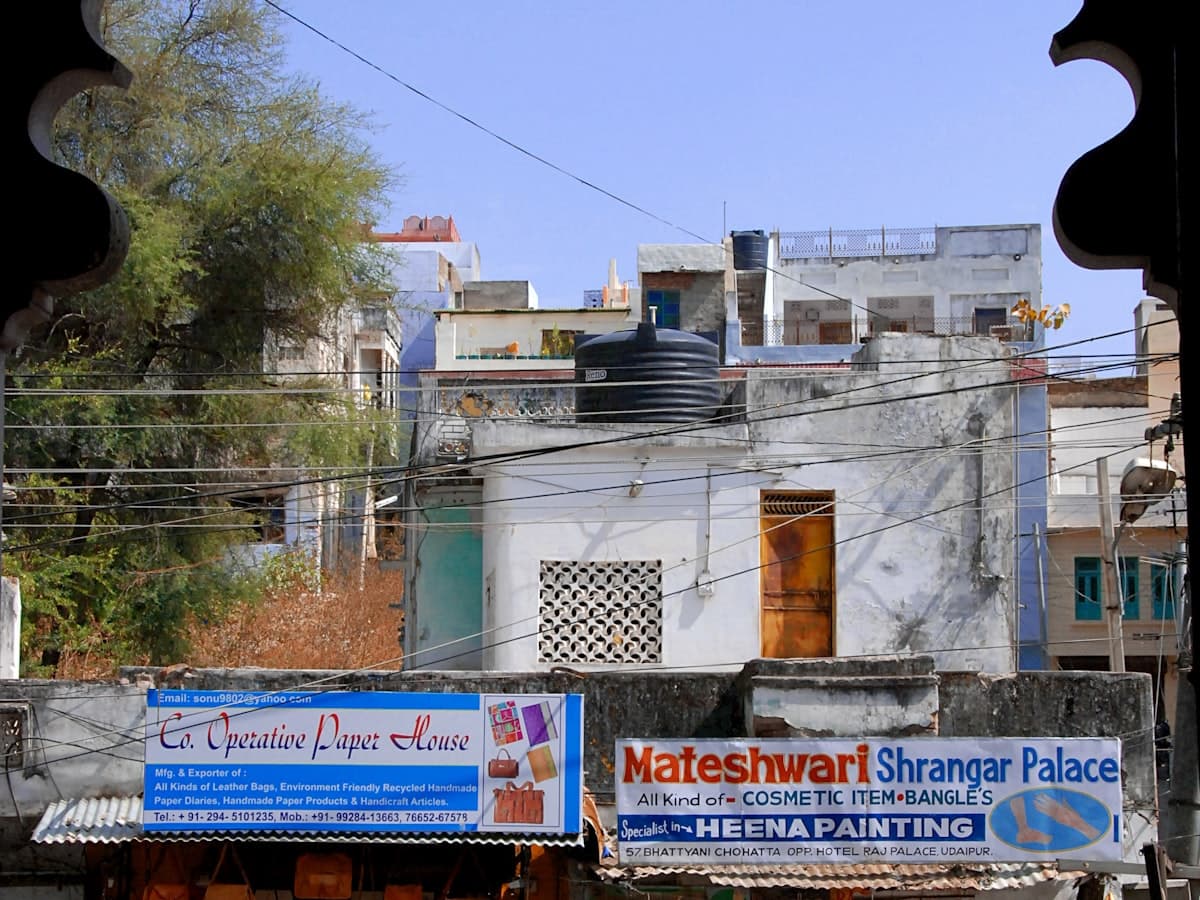
Udaipur Old City Heritage Walk
Walk the lanes behind the ghats — havelis, workshops and the city's older street plan.
How To Travel
Journeys Through Rajasthan
Every journey here comes with a private guide and driver for each day on the road — full pricing lives on each journey's own page.
Rajasthan Desert Forts & Lakes Grand Tour — Luxury
Mehrangarh Fort & the Blue City — Jodhpur's Old City & Toorji Ka Jhalra Stepwell
Rajasthan Desert Forts & Lakes Grand Tour — Premium
Mehrangarh Fort & the Blue City — Jodhpur's Old City & Toorji Ka Jhalra Stepwell
Rajasthan Golden Cities Grand Tour — Luxury
Arrival in Jaipur — City Palace & Hawa Mahal — Amber Fort & Jaipur's Old City Bazaars
Rajasthan Golden Cities Grand Tour — Premium
Arrival in Jaipur — City Palace & Hawa Mahal — Amber Fort & Jaipur's Old City Bazaars
Rajasthan Desert Circuit — Luxury
Arrival in Jaipur — City Palace & Hawa Mahal — Amber Fort & Jaipur's Old City Bazaars
Rajasthan Desert Circuit — Premium
Arrival in Jaipur — City Palace & Hawa Mahal — Amber Fort & Jaipur's Old City Bazaars
Rajasthan Desert Forts Explorer — Luxury
Mehrangarh Fort & the Blue City — Jodhpur's Old City & Toorji Ka Jhalra Stepwell
Rajasthan Desert Forts Explorer — Premium
Mehrangarh Fort & the Blue City — Jodhpur's Old City & Toorji Ka Jhalra Stepwell
Rajasthan Golden Cities & Kumbhalgarh — Luxury
Arrival in Jaipur — City Palace & Hawa Mahal — Amber Fort & Jaipur's Old City Bazaars
Rajasthan Golden Cities & Kumbhalgarh — Premium
Arrival in Jaipur — City Palace & Hawa Mahal — Amber Fort & Jaipur's Old City Bazaars
Rajasthan Desert Forts — Short Break — Luxury
Mehrangarh Fort & the Blue City — Jodhpur to Jaisalmer — Into the Thar Desert
Rajasthan Desert Forts — Short Break — Premium
Mehrangarh Fort & the Blue City — Jodhpur to Jaisalmer — Into the Thar Desert
Where To Stay
Real Stays, Chosen City By City
A private itinerary through Rajasthan is anchored by real, handpicked stays — heritage palaces and boutique properties chosen city by city, not a single hotel chain repeated everywhere.
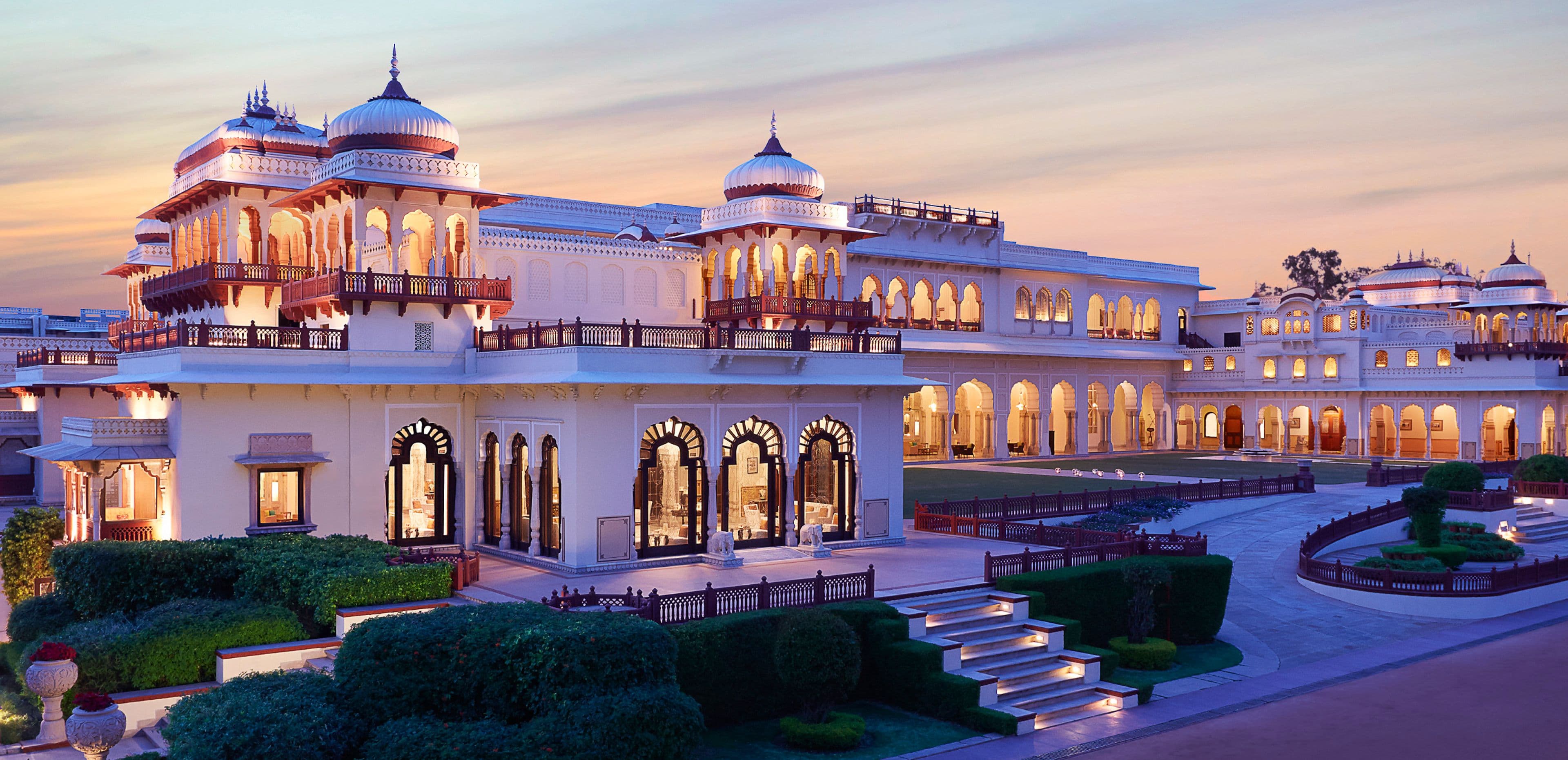
Rambagh Palace
Rambagh Palace began life in 1835 as a garden house. It became a hunting lodge, then the residence of the Maharaja of Jaipur. Today it is a Taj hotel. It still reads as a private home rather than a property. The setting is 47 acres of walled garden, and all of it sits inside Jaipur city. Peacocks cross the lawns at dusk. Marble corridors run past hand-carved sandstone screens and old family portraits. Very little has been added that does not belong. Rooms and suites keep their original proportions. Many look straight out over the formal gardens. The Royal Suites were once the Maharani's own apartments. The restoration left the frescoes and the silk where they were. Dining is a large part of the appeal here. Suvarna Mahal serves royal Indian cuisine in what was the palace ballroom. The Rajput Room opens onto the veranda for long, slow breakfasts. Steam Bar is built around a restored 1930s locomotive. The Jiva Grande Spa occupies its own wing. Treatments draw on Rajasthani royal ritual, and the indoor pool sits beneath a vaulted ceiling. Amber Fort and the old walled city are both about twenty minutes away.
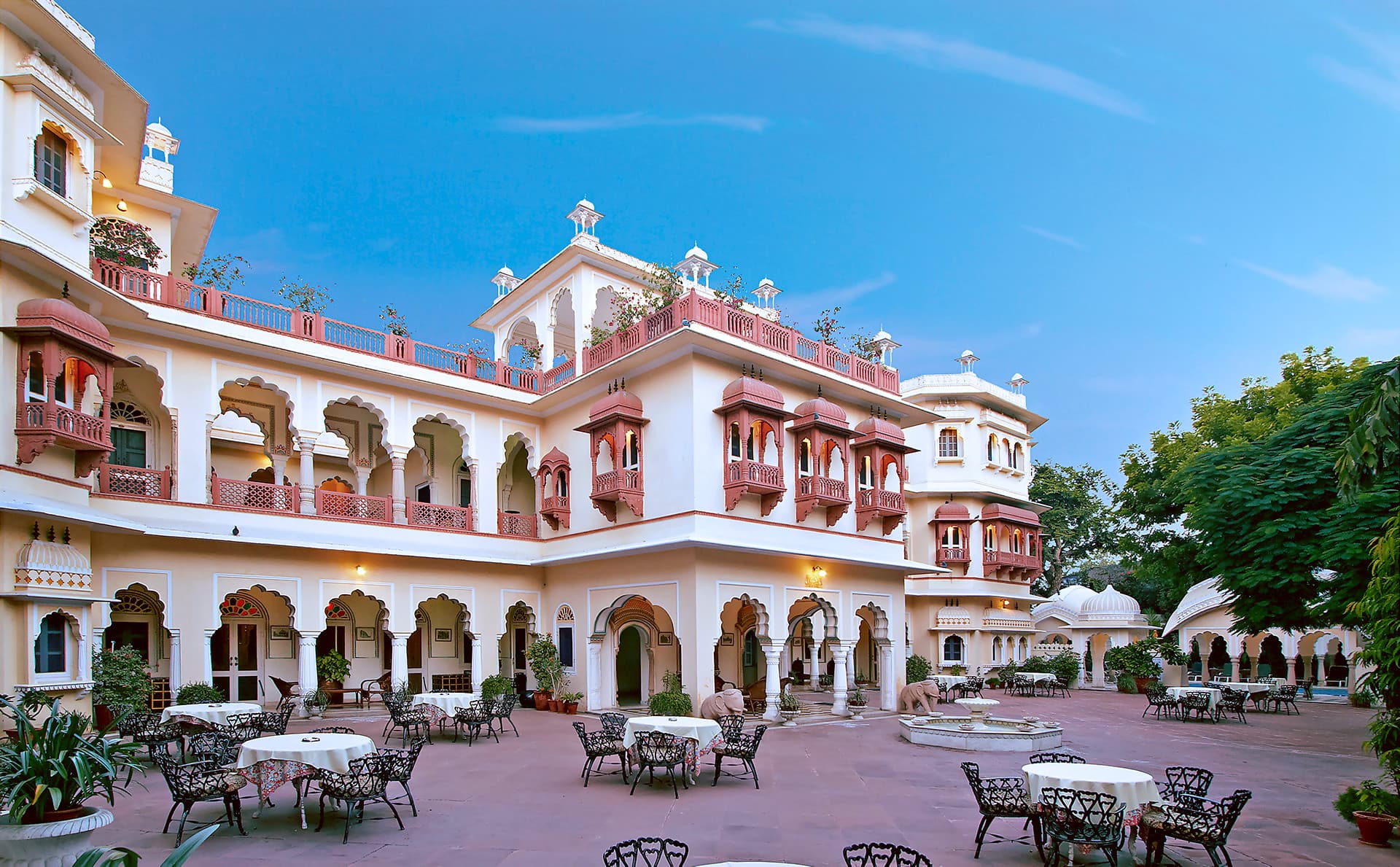
Alsisar Haveli
Alsisar Haveli was built in 1892 as a family mansion. It still belongs to the same family, the Thikana of Alsisar in Shekhawati. That continuity is the point of staying here. Nothing about it feels leased or rebranded. The building works the way old Rajasthani havelis do. Rooms open off a series of open courtyards. Painted arches, carved jharokha windows and frescoed walls survive throughout. Corridors turn where the original plan turned, not where a floor plate would have preferred. Every room is decorated on its own terms. Some carry old family furniture. Ceilings are high, windows are shuttered, and the walls are thick enough to keep the Jaipur heat outside. There is a swimming pool set in the garden, which is rare for a haveli of this age in the middle of a city. Meals are served on the terrace and in the courtyard. The kitchen cooks Rajasthani home food alongside a wider menu. The location is central. The walled Pink City, Hawa Mahal and the bazaars around Johari Bazaar are a short drive away. Amber Fort is roughly half an hour out.
Suryagarh Jaisalmer
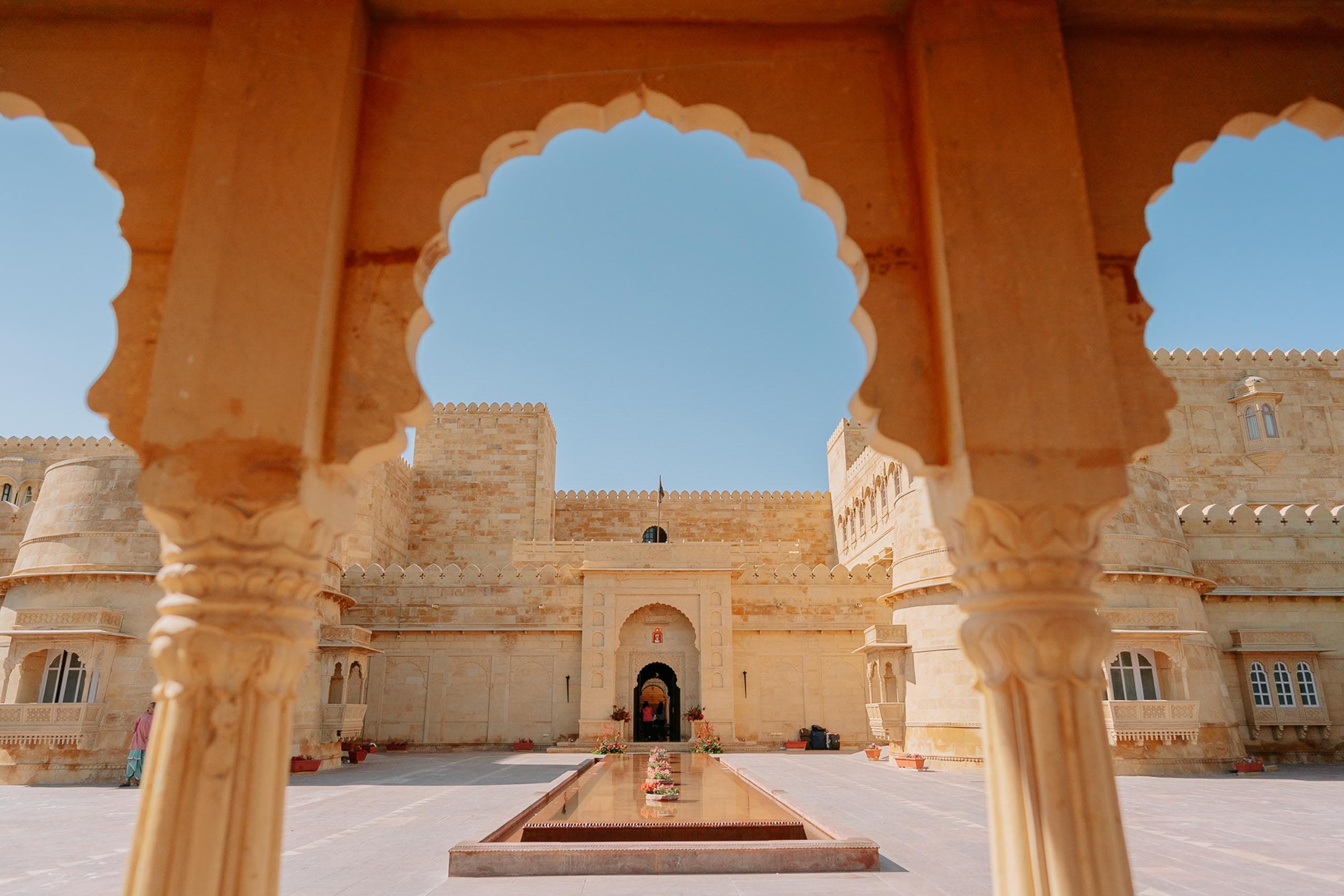
Suryagarh rises from the desert like a fortress reborn. Built from local golden sandstone, it stands on the Sam road outside Jaisalmer city, facing the dunes of the Thar Desert. The design draws on Rajasthan's fort architecture. Turrets, jharokhas, and courtyards recall the region's royal past. This is a heritage hotel in spirit, not merely in name. Suryagarh is a member of Small Luxury Hotels of the World. That membership signals a level of service and design refined for discerning travellers. Inside, the property blends traditional Rajasthani craftsmanship with contemporary comfort. Guests can unwind at the spa or swim in the indoor pool. A fitness centre and sauna round out the wellness offering. The restaurant serves a buffet of local and international dishes. A coffee shop, concierge desk, and 24-hour room service support a smooth stay. Suryagarh sits close enough to Jaisalmer city for day trips to the fort and old town. Yet it feels worlds away. Evenings here bring desert stillness and starlit skies. For travellers seeking Jaisalmer's grandeur with real comfort, Suryagarh delivers both.
Fort Rajwada
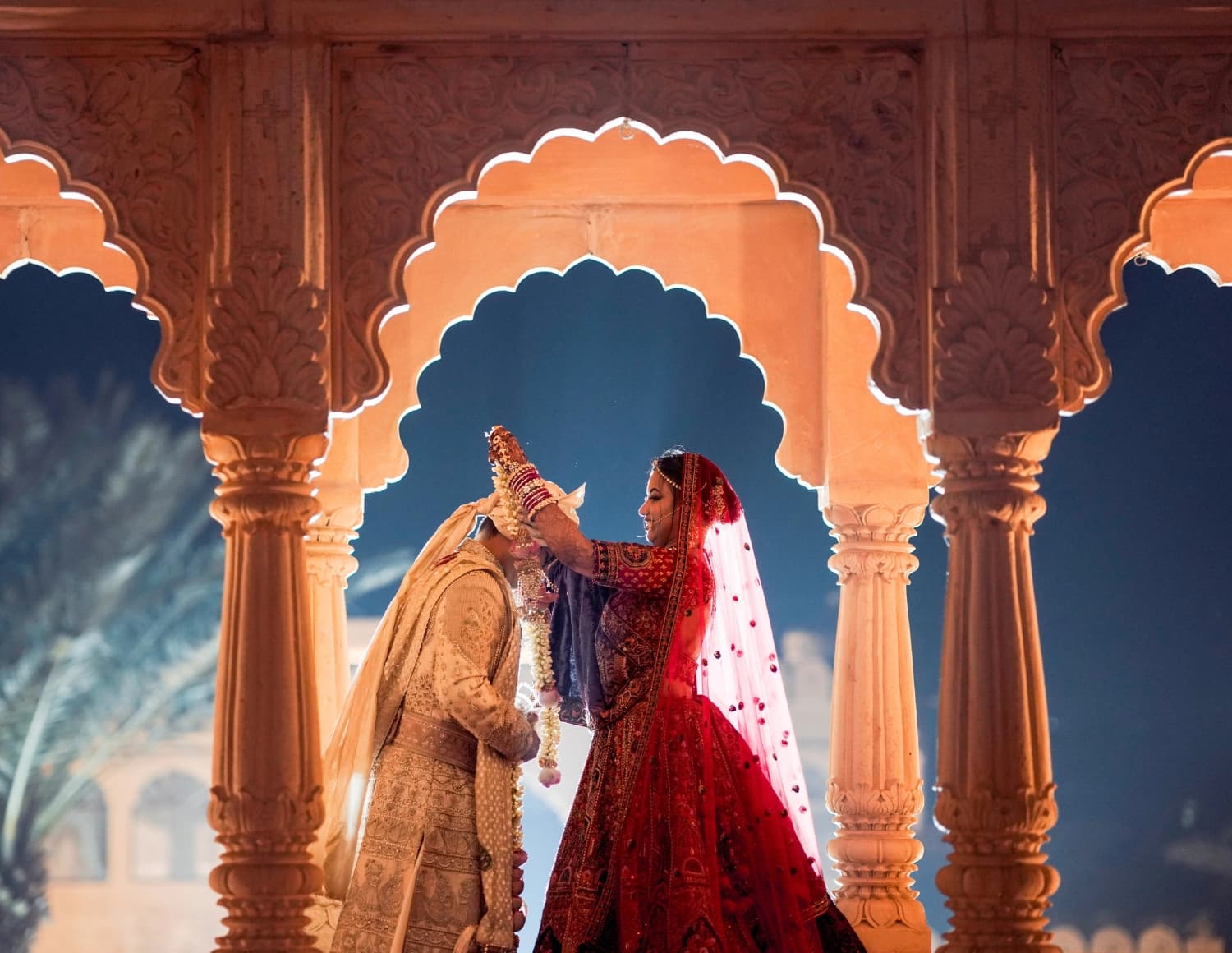
Fort Rajwada was built in the late 1990s, but not in a modern idiom. The design came from a team that included the architects who worked on Jaisalmer's own restoration projects, and the building follows classical Rajasthani proportion closely enough that first-time visitors often mistake its age. It stands on the Jodhpur-Barmer link road, a short drive outside the walled city. That distance is an advantage. Jaisalmer Fort is a living fort with narrow, crowded lanes, and stepping back from it at the end of the day is welcome. The interior is built around a large central atrium in golden Jaisalmer sandstone. Carved brackets, jharokha balconies and stone screens run through the public areas. Corridors are wide and cool, which matters in a desert town. Rooms are generous and traditionally furnished, with arched alcoves and carved headboards. The Royal Palace and Terrace categories add more space and better outlooks. Bathrooms are conventional and well kept rather than designed. There is a large outdoor pool, an Ayurvedic spa and a multi-cuisine restaurant that does a reliable Rajasthani thali. Staff arrange desert safaris to the Sam and Khuri dunes, and the fort, Patwon Ki Haveli and Gadisar Lake are all ten minutes away.
RAAS Jodhpur
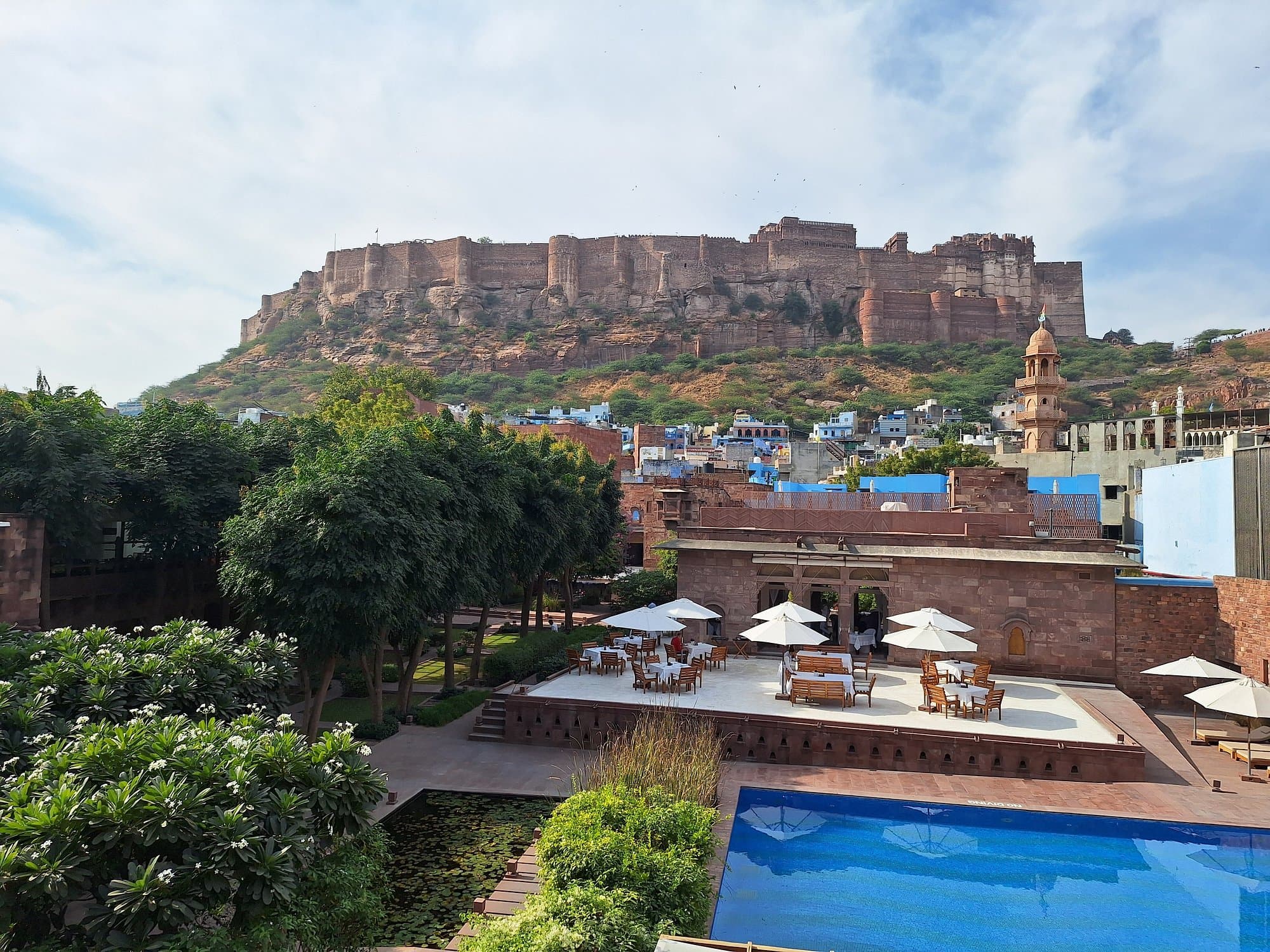
RAAS Jodhpur sits inside the old walled city, just beneath Mehrangarh Fort. The location is rare. Few luxury hotels in Jodhpur place guests this close to the fort's sandstone ramparts. Blue-washed houses line the narrow streets outside its gates. The hotel itself is a study in restraint. Contemporary architecture sits beside restored heritage havelis on the same property. Locally quarried stone and clean lines replace the ornate excess found elsewhere. The result feels calm rather than crowded. RAAS Jodhpur offers air-conditioned rooms and suites across the property. Many have a fireplace, a minibar, and a separate sitting area. Bathrooms come stocked with bathrobes, slippers, and toiletries. Guests can choose between two restaurants and two bars or lounges for dining and drinks. A rooftop terrace looks out over the Blue City and the fort above it. There is also a full-service spa, a steam room, and an outdoor pool. Free WiFi, valet parking, and a daily breakfast buffet round out the offering. For travellers who want Jodhpur's fort-and-old-city view without the noise of the market lanes, RAAS Jodhpur is the address to know.
Ajit Bhawan
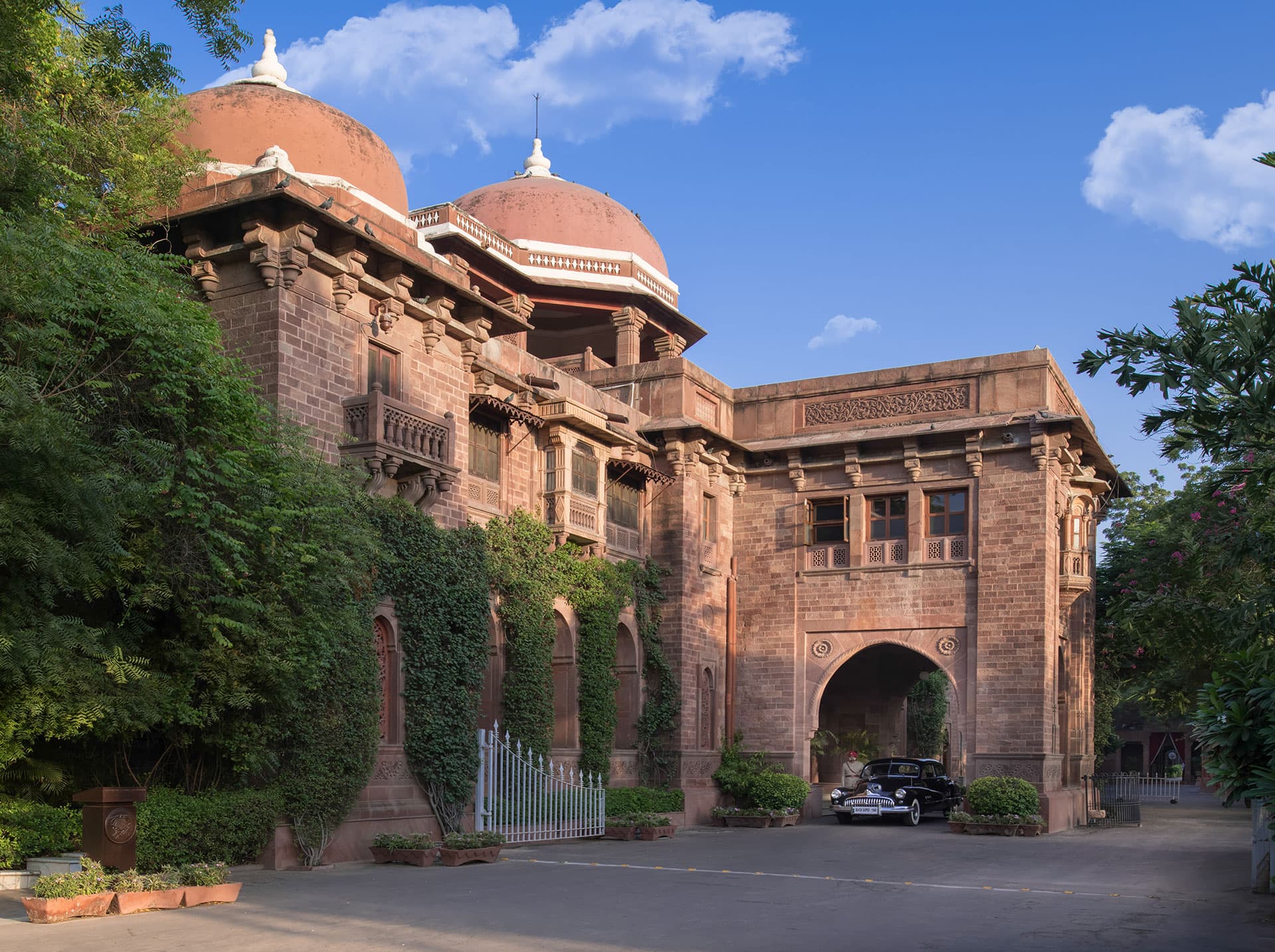
Ajit Bhawan has a real claim to being India's first heritage hotel. It was built in 1927 as the residence of Maharaj Ajit Singh, younger brother of the Maharaja of Jodhpur. The family opened it to guests in the 1970s, well before the idea became common, and they still run it. The property sits on Circuit House Road, close enough to Mehrangarh Fort that the fort walls are visible from parts of the garden. The grounds are the appeal: mature trees, lawns, water channels and a pool, all within the city. Accommodation is spread across the original house and a set of individual cottages and tents in the garden. That means no two categories feel alike. Vintage Suites keep period furniture and family pieces. The Vintage Tents are permanent, properly built, and considerably more comfortable than the name suggests. Food is served in the garden restaurant, and the kitchen's Rajasthani cooking is a genuine reason to eat in rather than out. There is also a bar and a spa on site. The family's vintage car collection is parked on the property, and they run jeep excursions to Bishnoi villages outside the city. Mehrangarh Fort, Jaswant Thada and the clock tower market are all short drives away.
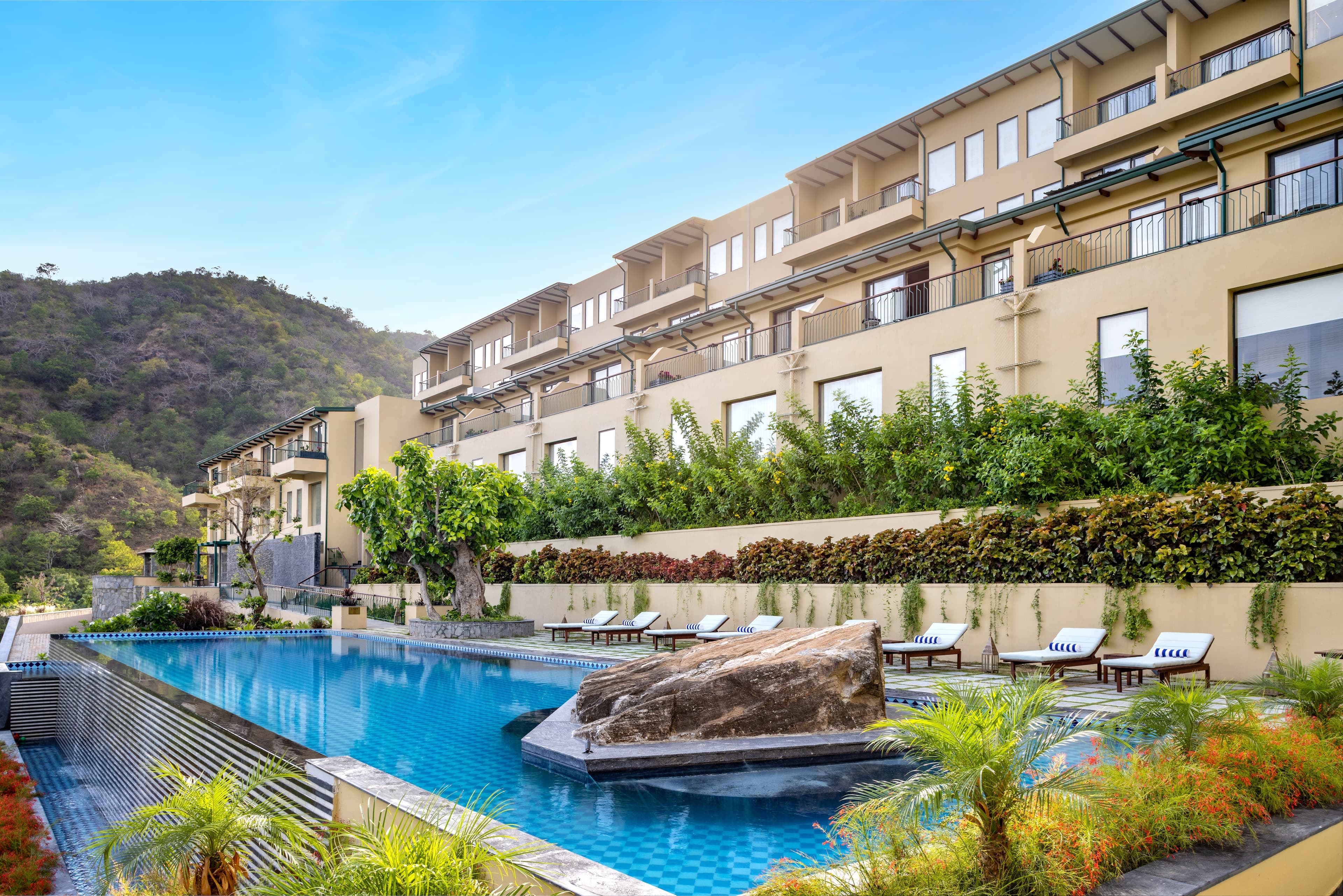
Radisson Blu Resort Kumbhalgarh
Kumbhalgarh has very little modern hotel stock, which makes this resort unusual. It is a full international five-star set in the Aravalli hills, about a twenty-minute drive from the fort itself. The scale of the site is what registers first. The buildings step down a hillside in local stone, so the resort reads as low and horizontal against the ridgeline. Terraces and walkways link the wings. From most points you are looking at bare hills rather than anything built. Rooms are large by regional standards, and the suites are larger again. Balconies face either the hills or the interior gardens. The finish is contemporary rather than heritage-styled, which is a deliberate contrast with the Rajasthan palaces most guests visit on the same trip. The outdoor pool is the centre of the property in warm months. There is also a spa, a fitness room and a multi-cuisine restaurant that handles both Indian and continental menus. Evening buffets often run on the terrace when groups are in. Kumbhalgarh Fort is the main draw nearby, with the second-longest continuous wall in the world. The Kumbhalgarh Wildlife Sanctuary and the Jain temple complex at Ranakpur are both realistic day trips from here.
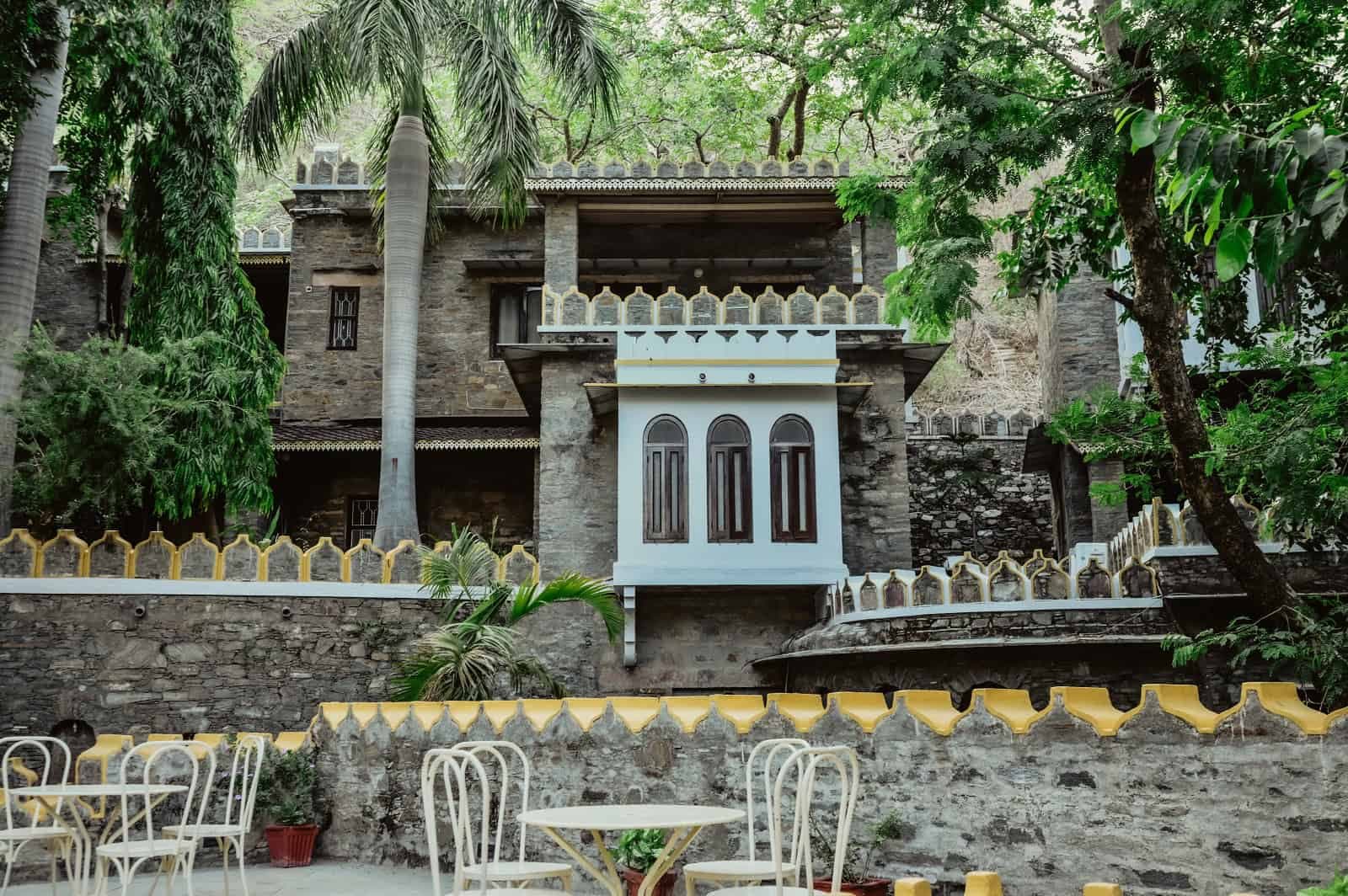
The Aodhi by HRH Group of Hotels
The Aodhi sits at the base of Kumbhalgarh Fort, one of Rajasthan's great hill forts. Stone walls and sloping tiled roofs echo the fort above. The setting is genuinely rural. Forested hills roll away from the property in every direction. This is a heritage hotel run by the HRH Group, the hospitality arm connected to the erstwhile royal family of Mewar. Twenty-six rooms are spread across two low floors, kept deliberately small in scale rather than built up. A large pool sits amid the greenery, and the spa offers a quiet counterpoint after a day exploring the fort's ramparts. Chowka, the in-house restaurant, serves Rajasthani and Indian dishes, with a bar and 24-hour room service for guests who prefer to eat in. Wildlife sanctuary walks, jeep safaris, and fort tours can all be arranged from the front desk. For a Kumbhalgarh stay built around the fort itself, The Aodhi remains one of the most established options in the area. Guests reach it via a scenic drive through the Aravalli hills from Udaipur, about ninety minutes south.
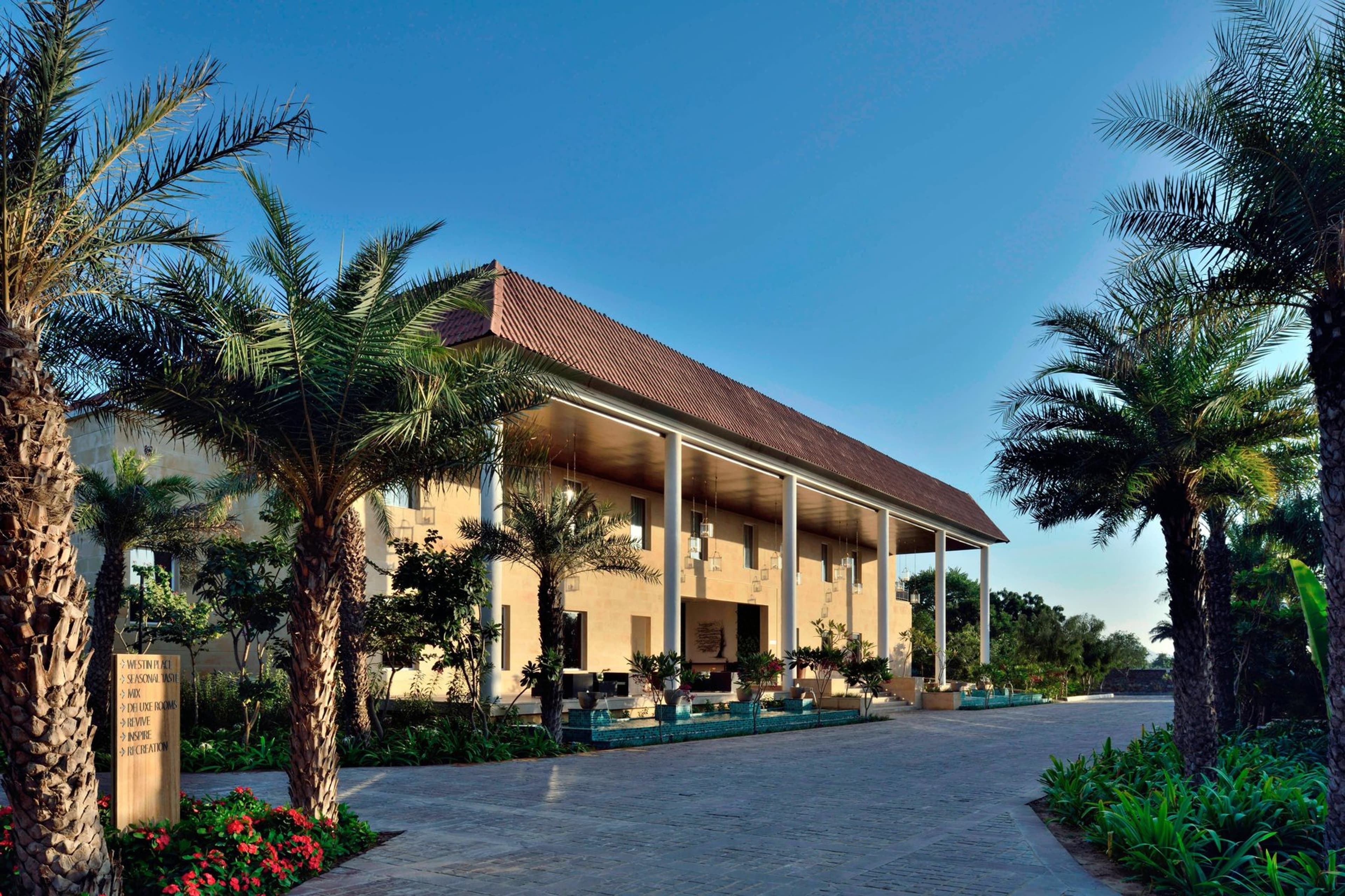
The Westin Pushkar Resort & Spa
The Westin Pushkar Resort & Spa sits on the outskirts of Pushkar, with the Aravalli hills rising behind it. This is a full-scale five-star resort, part of Marriott's Westin brand, built for guests who want wellness and comfort alongside their Rajasthan sightseeing. All 98 rooms open onto garden or mountain views, and several come with their own private pool and a balcony or patio set up for dining. The spa runs a full menu of treatments, and there's a 24-hour gym for guests keeping up a routine on the road. Dining spans Seasonal Tastes, which mixes continental, Indian, and other Asian dishes, Mix, the resort bar, and Panorama, a rooftop lounge with cabana seating. A business center and meeting space serve guests combining leisure with work. Pushkar itself, with its sacred lake and camel fair heritage, is a short drive away. The resort works well as a base for both the town's temples and the wider desert landscape around it.
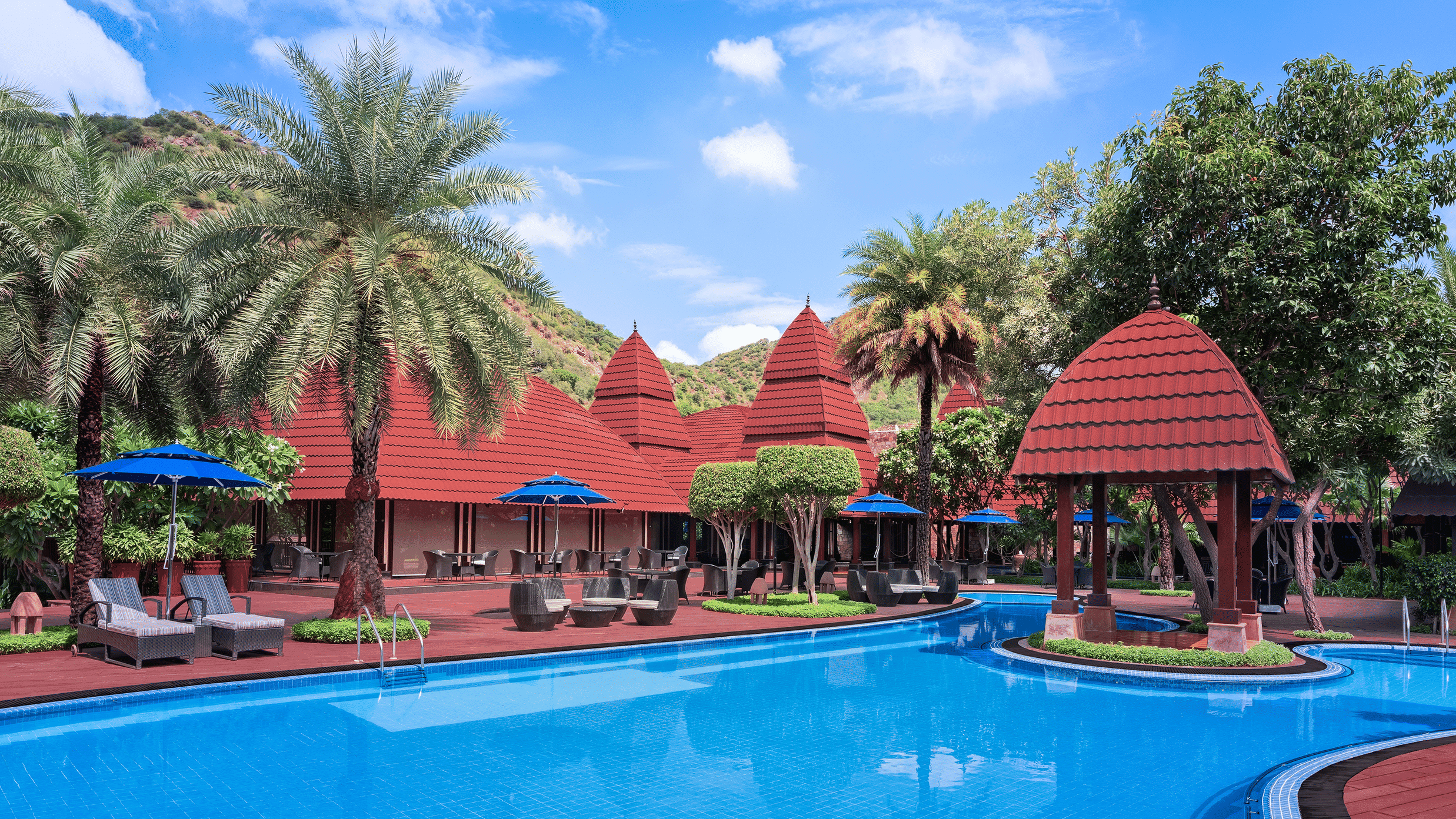
Ananta Spa & Resorts, Pushkar
Ananta sits on the Pushkar-Ajmer road, a few minutes outside the town, with the Aravalli range rising directly behind it. Pushkar itself is small, dense and built around its lake, so a resort with room to spread out is a useful counterweight. The site is large and low-rise. Accommodation is split between cottages, villas and permanent luxury tents, arranged around gardens and water features. Walking between them takes a few minutes, and the hills stay in view for most of that walk. Interiors mix contemporary comfort with Rajasthani decorative detail, and the tented categories are properly finished rooms under canvas rather than camping. Several categories add a private sit-out or plunge pool. There is a spa, a good-sized outdoor pool, a bar and a multi-cuisine restaurant. Pushkar is a temple town where alcohol and meat are restricted within the centre, so the resort's own dining is more relevant here than it would be elsewhere. The Brahma Temple, Pushkar Lake and the ghats are a short drive away, and the resort runs transfers. If you are travelling in November, the Pushkar Camel Fair takes place nearby and rooms across the town book out months ahead.
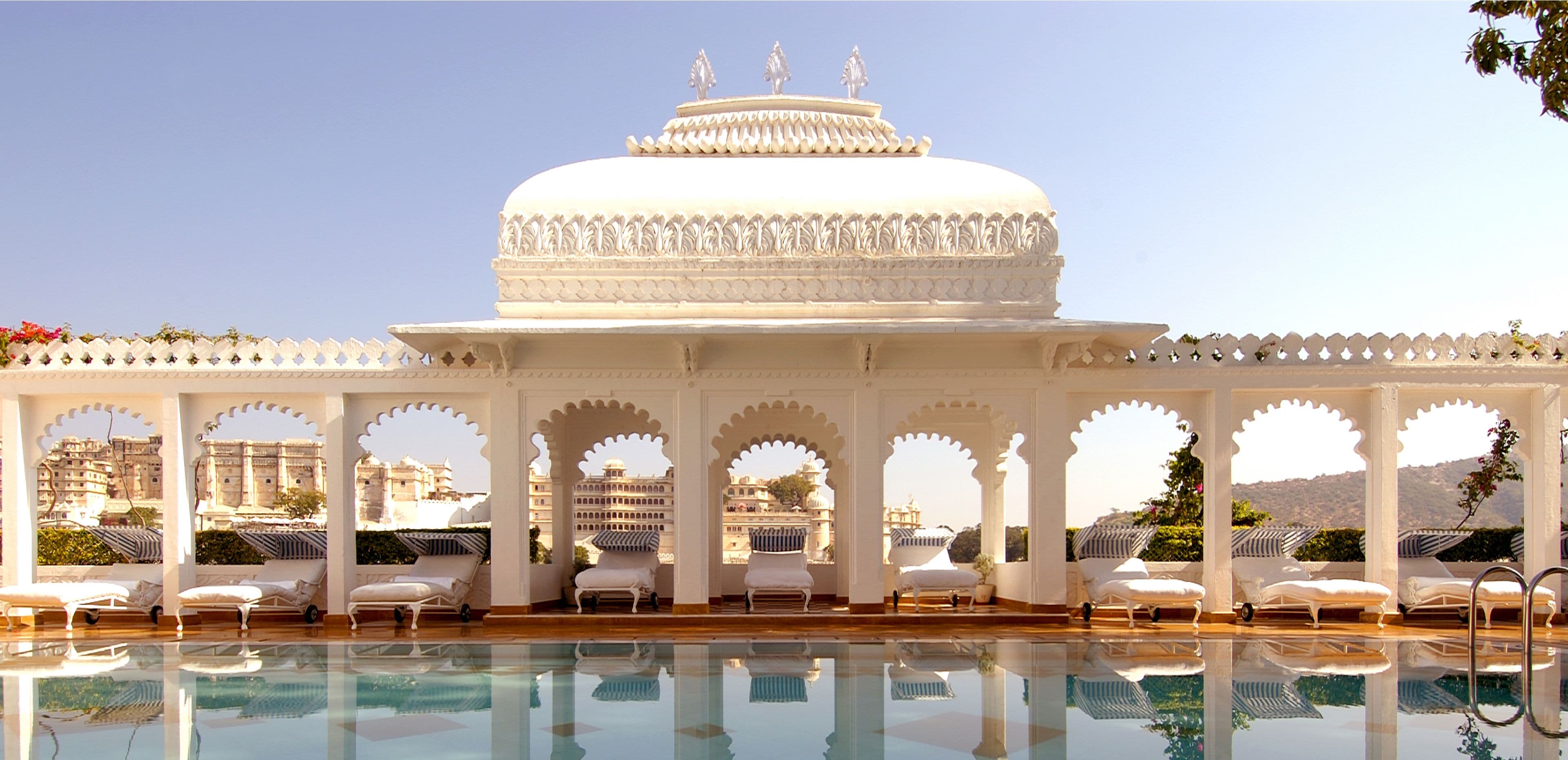
Taj Lake Palace
Taj Lake Palace was built in 1746 as a royal summer retreat. It covers a four-acre island in Lake Pichola. There is no road to it. Guests arrive by the hotel's own boat, and that short crossing sets the tone for everything after. The palace is carved from white marble and seems to float. Courtyards open into lily ponds. Corridors are inlaid with coloured glass and mirrorwork. From the water, the building reads as a single unbroken line, which is why it turns up in so many films. Every room looks at water. Some face the City Palace on the eastern shore. Others look west to the Aravalli hills and the Monsoon Palace on the ridge. The grand suites keep their original cusped arches and painted ceilings. Dining runs from Neel Kamal, which serves Rajasthani and Mewari dishes, to Jharokha on the terrace. Bhairo sits on the upper level and opens only for dinner. A private boat can be laid for a table of two on the lake itself. The Jiva Spa occupies a restored royal barge moored alongside. Treatments follow Indian wellness traditions. Udaipur's ghats, temples and the City Palace complex are all a few minutes away by launch.
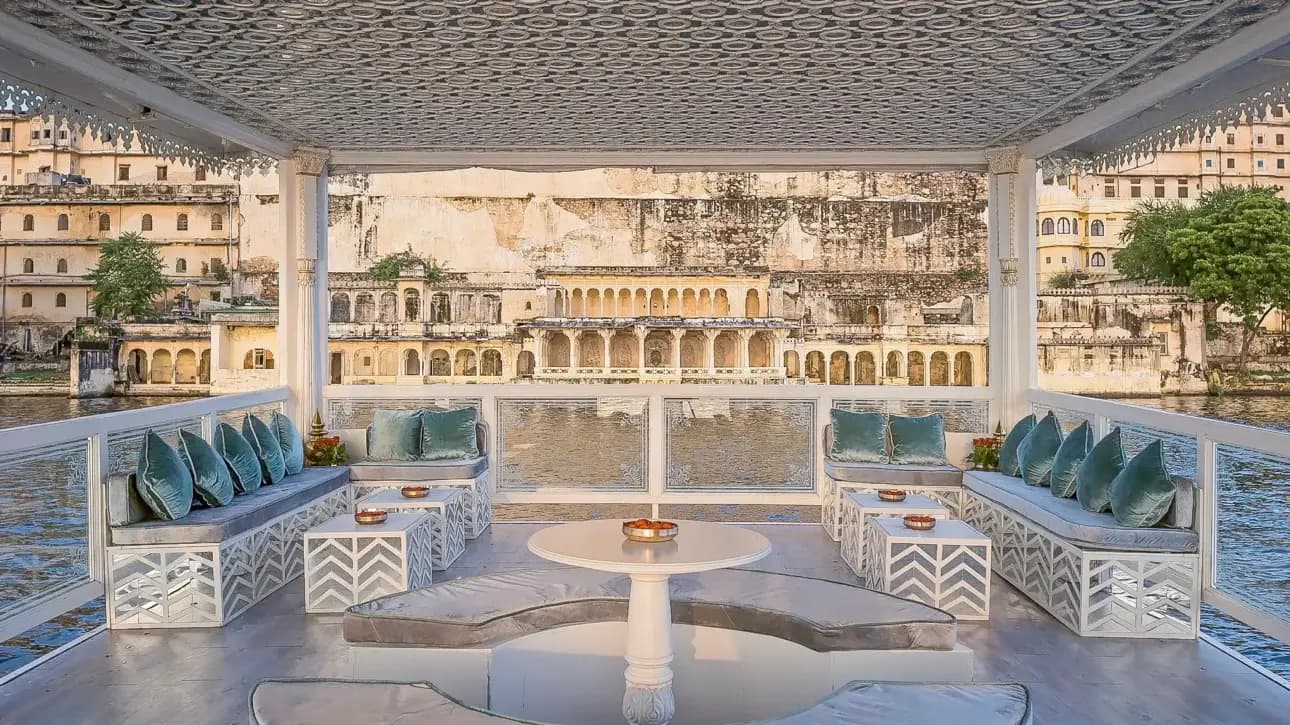
Jagat Niwas Palace
Jagat Niwas Palace sits directly on Lake Pichola, on the old Lal Ghat waterfront. The building is a 17th-century haveli, converted room by room rather than gutted. The stonework, the arches and the window seats are original. What you are paying for here is the water. The lake starts at the foot of the wall. The Taj Lake Palace floats a few hundred metres out, the City Palace rises to the left, and the Aravalli hills close the view behind. Lake-facing rooms look straight into all of it. Rooms are reached through narrow whitewashed passages and small courtyards. Cusped arch windows, carved niches and low seating alcoves come with the building. Sizes vary, because a 17th-century haveli was never built to a standard plan. The rooftop restaurant is the property's best-known room. It serves Rajasthani and Indian dishes over the lake, and it stays busy at sunset for good reason. Everything in old Udaipur is walkable from the gate. Jagdish Temple is minutes away on foot, the City Palace complex a little further, and the ghats run in both directions along the shore.
Why Travel With Us
Sixteen Years, One Philosophy
Thirteen years in, my job is knowing which side gate skips the queue at every fort on the route. That's the whole job — being the person who already knows.
Brijesh Sharma · Bespoke Itinerary ExpertContinue Your Journey

Kerala
Kerala trades forts for backwaters — palm-lined canals, spice-scented hill air, and a houseboat cruise that turns travel itself into the quietest part of the trip.

Delhi
Delhi layers seven historic cities into one — Mughal forts and tombs standing a few streets from colonial-era avenues and Old Delhi's working bazaars.

Uttar Pradesh
Home to the Taj Mahal — Agra's Mughal monuments make Uttar Pradesh the essential third stop on a private Golden Triangle route from Delhi and Jaipur.

Golden Triangle
India's classic first route — Delhi, Agra, and Jaipur in one private circuit, covering the Red Fort, the Taj Mahal, and Amber Fort in a single journey.

Goa
Goa pairs sunlit beaches with Portuguese-era churches and villas, so a private guide can carry you from a quiet cove to a UNESCO basilica in the same afternoon.

Himachal Pradesh
Himachal Pradesh climbs from British-era hill stations to Tibetan monastery towns, so a private guide can trade a colonial mall road for a Himalayan valley in a single morning drive.

Meghalaya
Misty hills, living root bridges, and the wettest slopes on Earth. We explore Meghalaya's hill country with a private guide.

Uttarakhand
Yoga on the Ganges, old hill towns, and wide Himalayan views. We explore Uttarakhand's hills with a private guide.

Karnataka
Royal palaces, coffee hills, and a lost imperial city. We explore Karnataka with a private guide.

Madhya Pradesh
Temple carvings and tiger reserves, linked by a private driver through India's central highlands.

Punjab
Sikh heritage and fertile plains, covered by a private driver from temple courtyard to open countryside.

Maharashtra
Mumbai's Victorian Gothic skyline paired with the rock-cut cave temples of Ajanta and Ellora.

West Bengal
Colonial Kolkata and Himalayan tea country, joined by a private guide across two very different Bengals.

Tamil Nadu
Dravidian temple towns and colonial hill stations, toured at a private, unhurried pace.

Kashmir
Houseboats on Dal Lake, Mughal gardens, and alpine meadows, toured at a considered pace.

Ladakh
A high-altitude desert of monasteries, palaces, and sand dunes, toured at a careful pace.

Gujarat
Private luxury tours through Gujarat's white salt desert, UNESCO heritage city, and centuries-old craft villages.

Sikkim
Private luxury tours through Sikkim's Himalayan monasteries, Kanchenjunga viewpoints, and hill-station capital.

Andaman & Nicobar
Private luxury tours through the Andaman Islands' coral reefs, colonial history, and beach coastline.
Frequently Asked
Planning Rajasthan
How many days do you need for Rajasthan?
Most private Rajasthan itineraries run 6–9 days — enough time to cover Jaipur and Udaipur without rushing between forts and palaces.
When's the best time to visit Rajasthan?
October through March, when daytime heat drops enough for a full day outdoors. The desert climate makes summer visits genuinely uncomfortable for sightseeing.
Is a private guide included at Amber Fort, City Palace, and the other attractions?
Yes — a private guide is with you at every attraction on the itinerary, including Amber Fort, City Palace, Hawa Mahal, and Jantar Mantar. Not a shared group tour, and not left to a ticket counter and a map.
Can Rajasthan be combined with Kerala on the same trip?
Yes — Rajasthan is often the first leg of a longer India journey, most commonly paired with Kerala's backwaters as a deliberate change of pace.

Kashmir to Kanyakumari
Get In Touch
Start Planning Your Rajasthan Journey
Tell us a little about who's coming and when — a private itinerary comes back built around your answer.